
The numbers don’t lie, but they don’t tell the whole story either. The global RAG market is on track to exceed $40 billion by 2026, yet somewhere between 70% and 80% of enterprise RAG deployments fail before they ever reach production. That’s not a pipeline problem. It’s a fundamental disconnect between what organizations believe RAG can do and what it actually takes to make it work at scale.
Here’s the uncomfortable truth most vendors won’t tell you: the difference between a RAG system that delivers real value and one that becomes an expensive experiment often comes down to security architecture. Something most teams treat as an afterthought rather than a foundation.
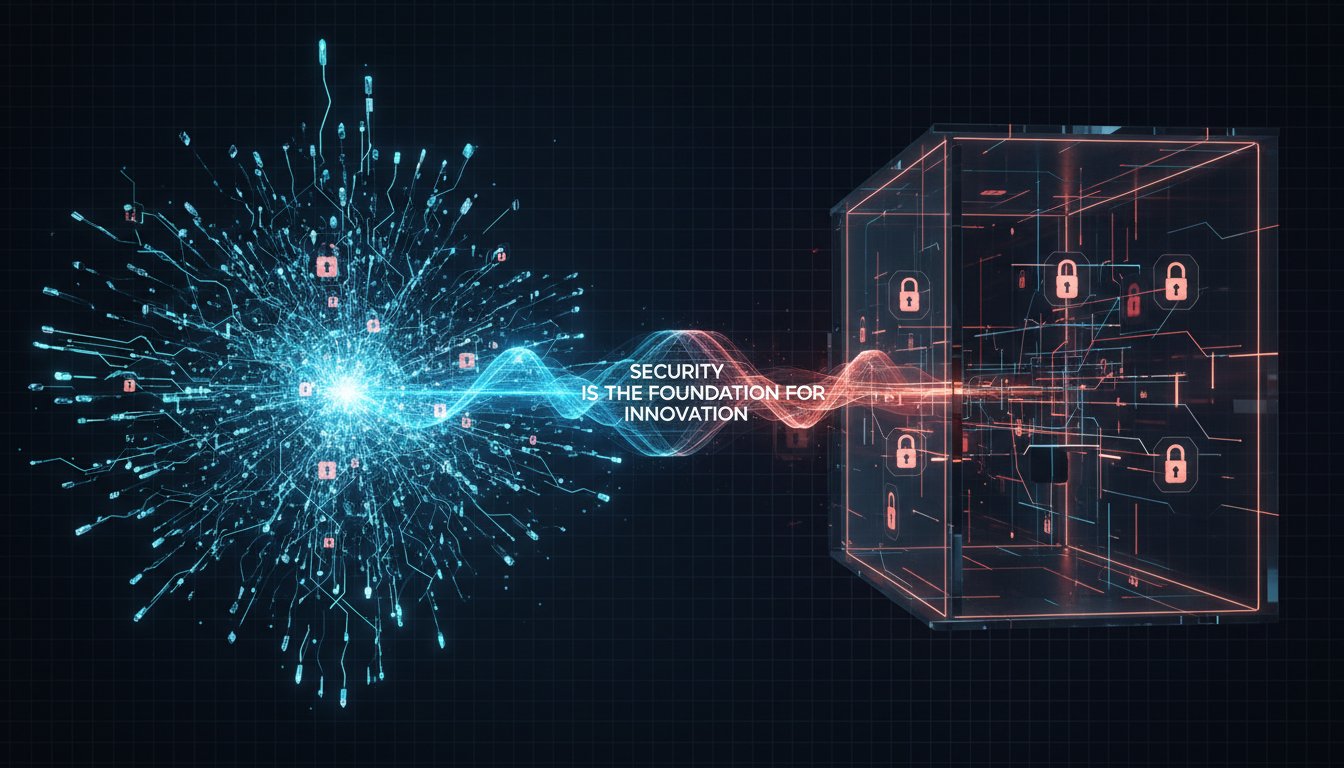
This isn’t about locking things down until nothing works. It’s about understanding that in the RAG ecosystem, security and capability aren’t opposing forces. They’re the same force. The enterprises winning in 2026 have already figured this out.
Let’s unpack why the RAG market’s explosive growth is happening at the same time as its deployment failures, and what you can do to land on the right side of that divide.
The Market Momentum Is Real, But It’s Creating False Confidence
The $40 billion projection isn’t fantasy. ResearchAndMarkets.com’s analysis points to accelerating enterprise AI integrations as the primary driver, with organizations racing to build internal knowledge retrieval systems that can compete with the responsiveness of consumer AI tools.
But here’s what the headline numbers obscure: that $40 billion represents potential spending, not realized value. When industry analysts dig into implementation data, a consistent pattern emerges. Companies are investing heavily in RAG infrastructure, including vector databases, embedding models, and orchestration layers, only to discover that their systems can’t survive contact with production workloads.
The 73% failure rate isn’t random. It’s concentrated in predictable failure modes: insecure database configurations that expose sensitive embeddings, data drift that gradually degrades retrieval accuracy until hallucinations become the norm, and runtime vulnerabilities that only appear once the system faces adversarial inputs.
POMA AI’s recent achievement of 77% token reduction through their PrimeCut chunking technology shows what’s possible when optimization is built into the architecture from day one. But token efficiency means nothing if your system leaks data or can be manipulated through prompt injection attacks.
The Security Blind Spot That Costs More Than You Think
The conversation around RAG security has lagged behind the capability conversation by at least 18 months. Most enterprise RAG content focuses on retrieval accuracy, latency optimization, and context window management. Security gets a paragraph, usually buried in a section about “best practices” that reads more like a checklist than a strategy.
This matters because RAG systems introduce attack surfaces that traditional application security frameworks weren’t designed to handle. When you’re retrieving context from a vector database and feeding it into an LLM, you’re creating a data pipeline with multiple points of compromise.
Prompt injection through retrieved context. Unlike traditional SQL injection, where malicious input stays in the database, RAG systems actively surface contaminated data into generation pipelines. If an attacker can influence what gets retrieved, they can influence what gets generated.
Embedding inversion attacks. Recent research has shown that embeddings can be reverse-engineered to reconstruct original training data. For enterprises handling sensitive information, including customer records, internal communications, and proprietary research, this isn’t theoretical. It’s a compliance nightmare waiting to happen.
Vector database misconfigurations. The rush to deploy RAG has outpaced security best practices. Publicly accessible vector databases, weak encryption at rest, and inadequate access controls have already led to documented breaches. The Thales AI Security Fabric, unveiled in January 2026, specifically targets these runtime threats in agentic AI and LLM-powered applications, acknowledging that the problem has reached enterprise scale.
Yoram Novick, CEO of Zadara, put it directly: “RAG will become the foundation of enterprise AI frameworks, crucial for tapping into data assets effectively.” But foundations crack when they’re built on insecure ground.
What Separates the 27% That Succeed
If 73% of RAG deployments fail, someone is getting it right. The pattern among successful implementations isn’t better models or bigger context windows. It’s treating security as an architectural requirement rather than a compliance checkbox.
Security-first chunking strategies. The best-performing enterprise RAG systems segment documents with security boundaries in mind, separating sensitive data categories at the ingestion layer so retrieval can enforce access controls at query time. This is fundamentally different from chunking for semantic coherence alone.
Observability that’s actually observable. Generic application monitoring misses what matters in RAG: retrieval quality metrics, embedding drift detection, and context relevance scoring. The companies succeeding are building custom observability stacks that surface retrieval failures before they cascade into generation errors.
Governance that doesn’t require sacrifice. The old trade-off was security versus usability. Lock down the system and nobody can access what they need. Modern RAG architectures are showing that well-designed role-based access control actually improves retrieval quality by filtering noise from irrelevant document categories.
Squirro’s 2026 positioning captures this shift: “RAG in 2026: It’s about bridging knowledge and generative AI to unlock enterprise AI ROI.” The bridge requires guardrails. Without them, you’re just building longer drop-offs.
The Window Isn’t Closing, It’s Just Getting More Selective
The $40 billion market opportunity isn’t going away. If anything, the 73% failure rate should be read as a signal of massive demand meeting inadequate supply, the classic conditions for a market correction.
What’s changing is who’s capturing that value. The first wave of RAG adoption rewarded teams that moved fast and iterated quickly. The second wave will reward teams that build security into their foundations from day one.
This isn’t about becoming risk-averse. It’s about becoming strategically precise. The enterprises that will lead in 2027 are the ones building RAG systems today that assume adversarial conditions, treat data governance as a capability differentiator, and recognize that the most expensive RAG deployment isn’t the one that fails. It’s the one that succeeds in ways that create liability.
The market is heading toward $40 billion. The question is whether you’ll be counting that revenue or counting your remediation costs.
The opportunity is real. The only paradox is pretending security isn’t part of the prize. If you’re building or scaling a RAG system right now, start with the security architecture, not as a final review gate, but as the blueprint everything else gets built on. That’s the move that separates the 27% from everyone else.