
The announcement dropped just hours ago: Kingfisher, owner of B&Q, Castorama, and Screwfix, has partnered with Google Cloud to pioneer “agentic commerce” across Europe. While headlines celebrate the dawn of autonomous shopping agents, enterprise technology leaders know the real story begins where the press releases end.
This isn’t just another AI partnership. It’s a $10 billion retailer betting that autonomous AI agents can fundamentally reshape how consumers shop for home improvement products. The promise is compelling: intelligent systems that anticipate needs, work through complex product catalogs, and make recommendations with human-like understanding. But beneath this vision lies a technical reality most organizations aren’t prepared for.
Enterprise RAG architects face a brutal truth: traditional retrieval architectures fall apart under the demands of agentic systems. Where conventional chatbots handle linear conversations, autonomous agents operate across multiple data domains at once, pulling from inventory systems, customer history, product specifications, and regulatory databases, all while maintaining context across extended interactions. The fragmentation that Kingfisher must work through across its eight distinct brands and thousands of suppliers mirrors what every enterprise faces: data distributed across systems, regions, and business units.
As we dig into this landmark partnership, we’ll uncover why most organizations’ RAG infrastructure will fail the moment they attempt similar agentic deployments, and what you can do to avoid that fate.
The Multi-Agent Memory Problem
Why Traditional Vector Stores Fall Short
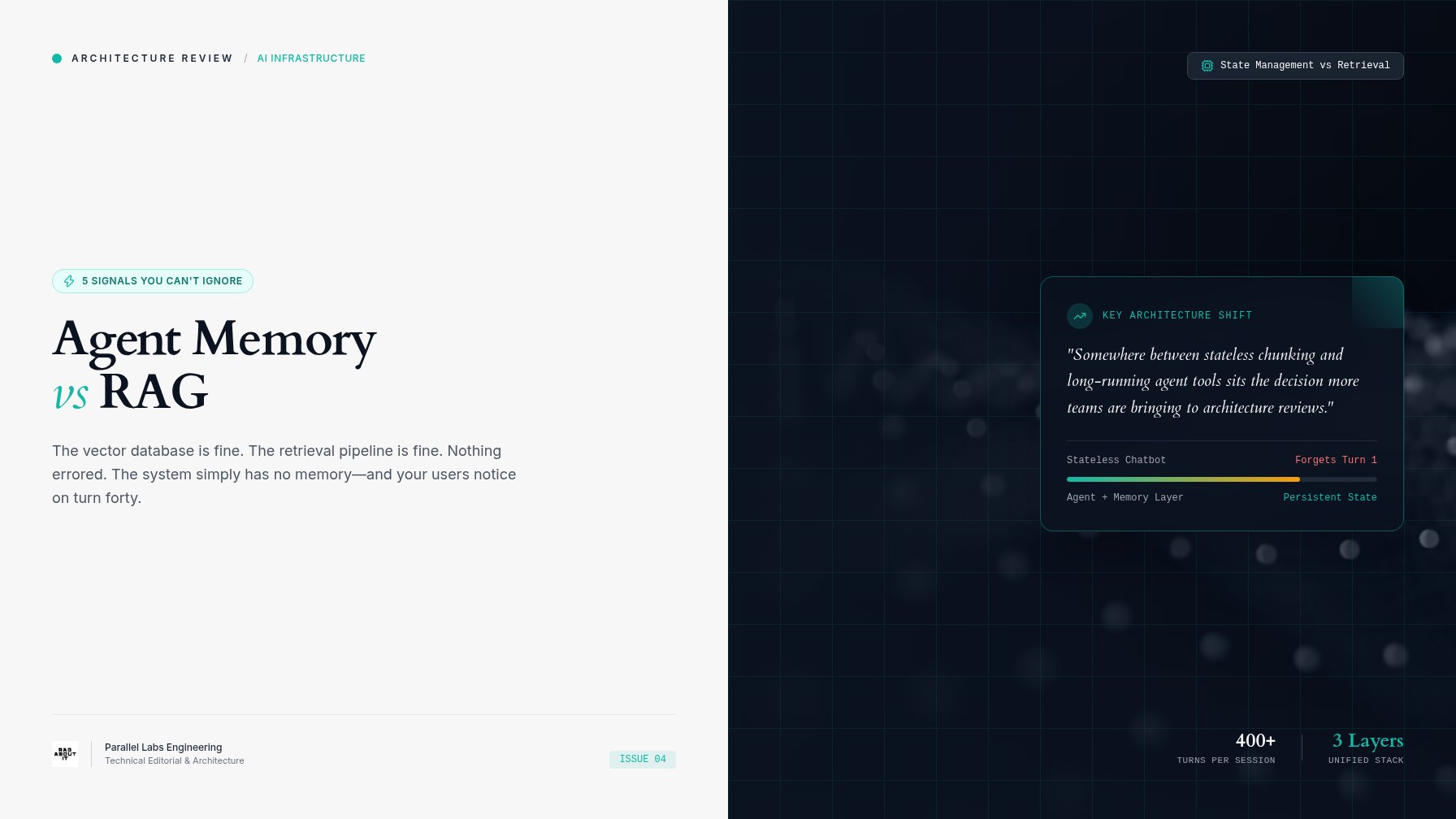
Kingfisher’s agentic commerce vision requires AI systems that remember previous interactions, understand user preferences over time, and maintain context across shopping sessions spanning weeks or months. Traditional RAG architectures treat each query as independent, creating what researchers call “the amnesic agent problem.”
Google Cloud’s Vertex AI platform likely applies what industry insiders call “session-aware retrieval,” a technique that maintains conversation context across multiple turns. But implementing this at enterprise scale reveals hidden complexity. Standard vector databases weren’t designed for temporal relationships. They treat “What paint should I use for my bathroom?” in month one as completely unrelated to “How do I apply that paint?” in month two.
The Federated Context Challenge
Kingfisher’s data lives across multiple systems: SAP for inventory, Salesforce for CRM, proprietary systems for supplier data, and local databases for store-specific information. Each system has its own access patterns, latency requirements, and governance rules. Agentic systems must work through this federated setup while maintaining consistent context.
Recent developments in federated RAG architectures show promise here. Starburst’s optimization with NVIDIA Vera CPU enables real-time data access without moving sensitive information, a critical requirement for retail compliance. But most enterprise teams lack the infrastructure to pull off such federated architectures, leading to compromised implementations that either duplicate data, creating consistency nightmares, or limit agent capabilities, defeating the purpose entirely.
The Retrieval Latency Crisis
Real-Time vs. Batch Realities
Agentic commerce runs on real-time customer interactions. When someone asks “Will this shelf fit in my 2.5-meter alcove?” during a live shopping session, sub-second responses aren’t a nice-to-have. They’re a conversion requirement. Traditional RAG systems built for internal knowledge bases or support chatbots typically operate with 2-3 second latency tolerances.
The shift to agentic systems exposes fundamental architectural limitations. Retrieval operations that seemed fast enough for internal use become painfully slow for customer-facing applications. Google Cloud’s infrastructure investments suggest they’re deploying specialized hardware accelerators for retrieval operations, but most enterprises don’t have similar resources at hand.
The Cost-Per-Query Reality
Every autonomous agent interaction involves multiple retrieval operations: understanding intent, accessing product information, checking inventory, reviewing customer history, and more. What appears as a single question to the user might trigger 10-20 separate retrievals behind the scenes.
Without careful fine-tuning, agentic systems quickly become cost-prohibitive. Organizations that scaled traditional chatbots often discover their cloud bills multiplying by factors of 5-10 when moving to agentic architectures. The Kingfisher deployment will test whether Google Cloud’s pricing models can make agentic commerce economically viable at scale. That’s a question every enterprise should be watching closely.
The Consistency Trap
Multi-Source Truth Problems
Home improvement shopping involves complex specifications: dimensions, material compatibility, safety regulations, installation requirements. Kingfisher’s agents must work through information from manufacturers, regulatory bodies, and internal experts, often with conflicting details.
Traditional RAG systems struggle with what data scientists call “source authority weighting.” Should the agent trust the manufacturer’s specifications, which might be optimistic, or customer reviews, which might be anecdotal? Should UK building codes override French regulations for a customer in Belgium? These questions aren’t theoretical. They determine whether someone buys the right product or returns it dissatisfied.
The Hallucination Amplification Risk
Autonomous agents face heightened hallucination risks because they operate with less human oversight. Where traditional chatbots might be monitored by human agents, truly agentic systems make decisions independently. A single hallucination about product compatibility or safety could have serious consequences in home improvement contexts.
Advanced RAG architectures now incorporate multiple verification layers: cross-referencing across sources, confidence scoring, and fallback mechanisms. But implementing these requires sophisticated retrieval engineering that most organizations simply don’t have. Kingfisher’s success will depend heavily on how well Google Cloud has addressed this verification challenge at scale.
The Integration Architecture Imperative
Beyond Simple API Connections
Agentic systems don’t just retrieve information. They trigger actions. Kingfisher’s agents will need to check real-time inventory, kick off delivery scheduling, process payments, and update customer profiles. This moves RAG from passive retrieval to active orchestration.
The technical complexity here is significant. Each integration point represents potential failure modes, latency bottlenecks, and security vulnerabilities. Traditional middleware approaches quickly get overwhelmed by the bidirectional, real-time nature of agentic interactions.
The Observability Gap
Most enterprise monitoring tools were built for request-response systems, not autonomous agents operating across extended sessions. When an agent makes a poor recommendation, traditional logging might show successful API calls but miss the contextual reasoning that led to the error.
Kingfisher’s deployment will require new categories of observability tools that track agent reasoning across time, context, and multiple data sources. Without these, debugging agent behavior becomes nearly impossible. That’s a risk few organizations have properly assessed.
The Path Forward: 3 Critical Upgrades
1. Implement Session-Aware Retrieval
Stop treating agent interactions as isolated queries. Build retrieval systems that maintain context across sessions using techniques like:
– Conversation memory banks that store relevant context
– Temporal vector embeddings that encode when information was accessed
– User preference models that evolve based on interaction history
2. Build Federated Retrieval Capabilities
Assume your data will stay distributed. Instead of forcing centralization, build retrieval systems that can intelligently work across federated sources:
– Use smart routing that directs queries to the most appropriate data source
– Apply metadata enrichment to maintain context across disparate systems
– Take advantage of emerging standards like NVIDIA’s Vera CPU optimizations for federated access
3. Design for Action-Oriented Architecture
Recognize that retrieval will increasingly trigger actions, not just surface information. Prepare by:
– Building event-driven integration patterns that handle bidirectional flows
– Putting in place thorough observability that tracks agent reasoning paths
– Developing fallback mechanisms that maintain service when individual systems fail
Kingfisher’s move into agentic commerce represents more than just another retail innovation. It’s a stress test for enterprise RAG architectures under real-world conditions. The challenges they’ll face in the coming months will reveal what truly separates functional prototypes from production-ready systems.
For enterprise technology leaders, the takeaway is straightforward: traditional RAG approaches won’t survive the agentic shift. The infrastructure decisions you make today will determine whether you’re leading that shift or watching it pass you by. Start building for session-aware, federated, action-oriented retrieval now, because as Kingfisher’s announcement makes clear, the future of AI in enterprise isn’t coming. It’s already here.
Ready to assess your RAG architecture’s readiness for agentic systems? Share your biggest infrastructure challenge in the comments, and let’s talk through practical solutions.