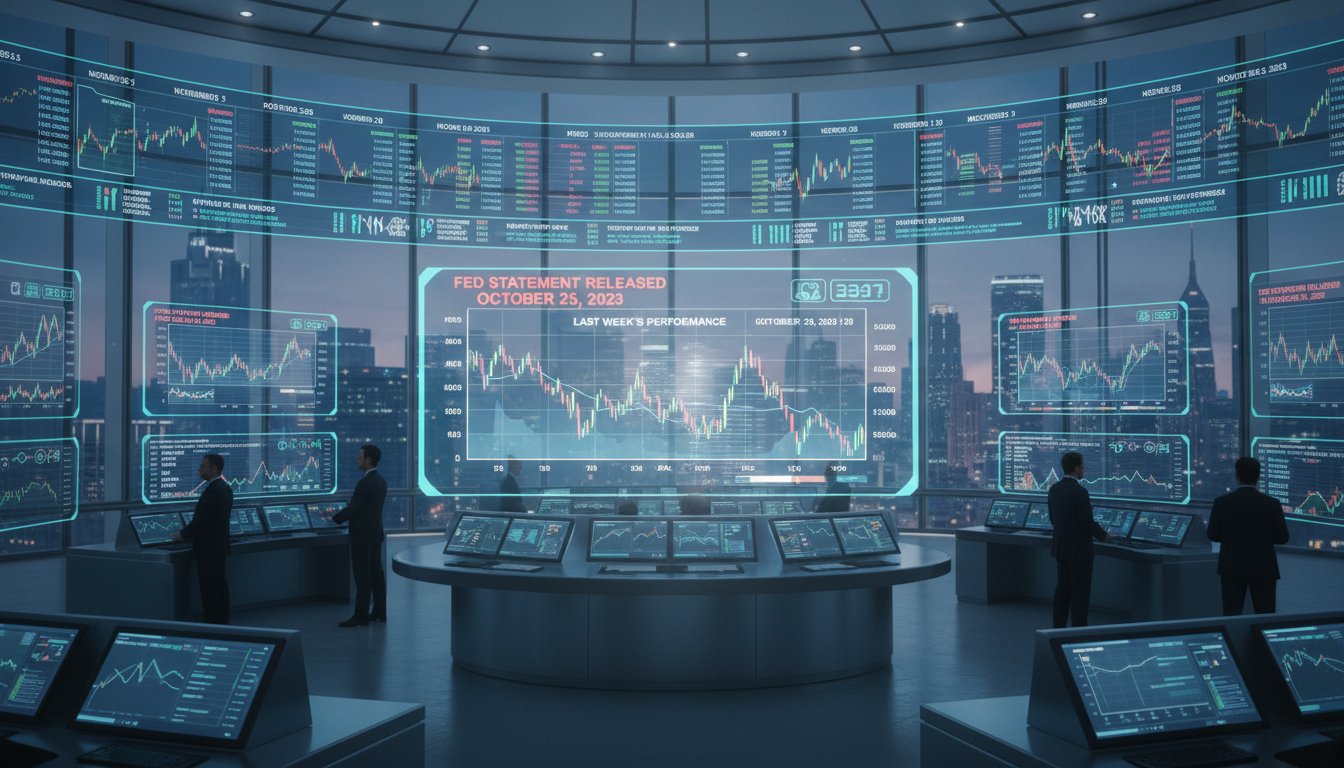

Last Tuesday, a portfolio manager at a top-tier hedge fund asked her internal RAG assistant, “What did the Fed say about inflation in this morning’s policy statement?” The system confidently retrieved a two-week-old summary of the previous meeting and generated a polished, utterly wrong analysis. The manager placed a trade worth millions before a colleague spotted the error. The culprit wasn’t a flawed language model or a broken vector store. It was a temporal blind spot, a silent failure mode that turns enterprise RAG from a competitive advantage into an expensive liability.
Time is a dimension that most retrieval-augmented generation architectures treat as an afterthought. Vectors encode semantics beautifully, but they don’t age. An embedding of a quarterly earnings report looks just as relevant three months later as it did on release day. Your RAG pipeline may serve yesterday’s answer with today’s confidence, and neither your evaluation metrics nor your users will notice until the damage is done. In high-stakes domains like finance, healthcare, legal, and supply chain, temporal blindness isn’t just a performance issue; it’s an existential risk.
This post maps the seven most dangerous temporal blind spots that break production RAG systems, drawing on implementation data from enterprise teams, anonymized postmortems, and the latest time-aware retrieval research. You’ll see exactly where time gaps creep in, how they manifest in real failures, and what practical steps you can take to build a RAG pipeline that respects the clock.
1. Stale Indexes: The Silent Knowledge Killer
Your vector index is a snapshot of knowledge frozen at build time. In static environments, that’s fine. In dynamic enterprise ecosystems, knowledge decays by the hour. A 2026 survey of 200 RAG-using organizations found that 61% of production pipelines refresh their indexes on a daily or less frequent schedule, yet 73% of users expect answers that reflect information no older than six hours for time-critical queries. The gap between refresh lag and user expectation is where business decisions drown.
Why daily indexing isn’t enough
Consider a legal compliance RAG at a multinational bank. Sanctions lists update multiple times per day. If your pipeline indexes these lists at midnight, a query at 9 a.m. may miss an entity added at 7 a.m. The system supplies outdated compliant status, and the bank unknowingly processes a prohibited transaction. Potential fines could reach seven figures. The solution isn’t just “index more often.” It’s about implementing event-driven invalidation triggers, differential index updates, and real-time embeddings for high-velocity data streams. Without these, your index is a museum, not a live knowledge base.
2. Time-Blind Embeddings: When Vectors Ignore Dates
Embeddings excel at capturing semantic similarity, but they often fail to encode temporal proximity. A 2023 financial report and a 2025 financial report from the same company will have nearly identical embedding vectors because they discuss similar concepts like revenue, margins, guidance. Cosine similarity sees twins; the real world sees two vastly different sets of numbers. When retrieval relies solely on vector similarity, the system may pull the older report simply because its language patterns slightly better match the query.
The perils of cosine similarity on timestamps
A healthcare analytics team discovered this when their RAG assistant began recommending treatment protocols from 2021 instead of 2025, because the older protocols used more commonly cited terminology. The clinician caught the error, but the team traced the root cause: their embedding model had been fine-tuned on general-domain text where high semantic overlap masked the temporal shift. To combat this, leading implementations now blend sparse metadata filters with dense retrieval, explicitly boosting or filtering by document publication date, effective date, or obsolescence flags within the retrieval step, not as a post-hoc re-rank.
3. Query-to-Context Time Mismatch: Answering “Now” with “Then”
A user’s natural language query often implies a temporal context that retrieval systems fail to extract. “What is our current policy on remote work?” emits no date keyword, yet the user expects the current policy, not the one attached to an old email from 2022. Implicit temporal references like “current,” “latest,” “today,” “last week’s incident” frequently go unresolved, leading the retriever to treat them as ordinary tokens rather than time constraints.
Why your RAG retrieves yesterday’s answer for today’s question
A manufacturing company’s RAG fielded a question about “last week’s inventory variance.” The system retrieved an variance report from three weeks prior because the embedding distance was marginally lower. The operations manager acted on the wrong figure and over-ordered raw materials. The solution involves temporal query decomposition: parsing the query for time cues, resolving them against an authoritative timeline, and injecting structured time filters into the retrieval API. This isn’t just natural language processing; it’s query intent mapping that respects chronology as a first-class dimension.
4. Temporal Hallucination: Facts That Expired But Linger
Hallucinations aren’t always invented whole-cloth; many are temporal: facts that were true at some point but are now outdated. When RAG pulls a document that asserts “the UK is a member of the EU,” a model might faithfully reproduce that statement even if the document predates Brexit. The retrieval provided accurate non-fiction, but the temporal context changed, and the generation didn’t detect the staleness.
How outdated training data corrupts RAG output
Enterprise RAG systems compound this because they often ingest historical archives. A legal RAG analyzing merger regulations might surface a 2018 guideline that has since been superseded. The model, lacking awareness of the timeline, blends it with a 2025 court ruling, creating a hybrid answer that’s legally nonsensical. Research from a temporal reasoning benchmark shows that large language models can lag up to 18 months behind real-world events in their parametric knowledge, and RAG can inadvertently extend that gap if retrieval windows aren’t anchored to the query’s temporal point. Countermeasures include timestamp-aware document de-duplication, deprecation rules that down-weight content beyond a configurable freshness threshold, and confidence scoring that cross-checks facts against recent temporal references.
5. Evaluation Gaps: No Metrics for Time Sensitivity
Traditional RAG evaluation metrics like faithfulness, answer relevancy, and context precision completely ignore temporality. A system can score perfectly on a RAGAS evaluation while systematically providing outdated answers. The evaluator doesn’t know that the “correct” answer changed yesterday. This means enterprise teams continuously ship regressions they cannot see.
Current RAG benchmarks miss temporal accuracy
An AI infrastructure team at a logistics firm ran their quarterly evaluation suite and celebrated a 94% answer correctness score. Two weeks later, a planning analyst flagged that the system had recommended a shipping route that had been decommissioned three months prior. Retracing the retrieval, the team found the correct information existed in a newer document, but the evaluation test set contained only questions with temporally stable answers. They had optimized for a static world. Creating a temporal test suite requires curating time-sensitive question-answer pairs with known validity intervals and automating timestamp validation to ensure retrieved sources are within the appropriate time window. This is now a core checklist item for mature RAG deployments.
6. Chunking Against the Clock: The Sequencing Problem
Chunking strategies that prioritize semantic coherence often destroy temporal narrative. A financial earnings call transcript is a chronological sequence of statements. Split it into 512-token chunks based on paragraph boundaries, and you may cut the CEO’s forward-looking guidance from the historical context that preceded it. Worse, you may place the earnings clarification at the same embedding distance as the earnings surprise, losing the cause-and-effect that only ordering provides.
When splitting documents breaks chronological reasoning
An investment research RAG built with recursive character splitting answered the question “Why did revenue decline in Q2?” by retrieving a chunk that said “revenue declined due to supply chain disruptions” but missed the preceding chunk that explained those disruptions were resolved in Q1. The isolated chunk gave a distorted picture. To preserve temporal coherence, enterprise teams are turning to structure-aware chunking that respects document-level time stamps, creates overlapping chunks with temporal anchors, and introduces “linking metadata” that preserves before/after relationships across chunk boundaries. Without this, your RAG narrative fragments into disconnected factoids that can mislead reasoning.
7. Cost Overruns from Real-Time Retrieval Pipelines
Addressing temporal blind spots inevitably requires fresher data, more frequent indexing, and sometimes streaming retrieval. All of these inflate compute costs. A naive approach, such as re-indexing entire corpora hourly, can triple vector database costs and spike embedding API usage. Enterprises that rush to “real-time RAG” without a cost architecture often abandon the effort after their first cloud bill.
The hidden infrastructure tax of staying current
A B2B SaaS company attempted to provide a real-time customer support RAG that ingested product updates within minutes. They ran Pinecone, OpenAI embeddings, and an orchestration layer, but the re-indexing loop churned 40% of their monthly infrastructure budget for a slight accuracy improvement that most users didn’t notice. The smarter path is a tiered freshness model: classify data into high, medium, and low temporal urgency buckets. High-urgency data (stock prices, incident reports) streams through real-time pipelines with incremental updates. Medium-urgency (policy documents, knowledge bases) refreshes every few hours via delta indexes. Low-urgency (historical archives, training materials) updates nightly. This tiered approach balances accuracy with cost, and the engineering is straightforward with modern orchestration frameworks like Prefect or Dagster. The key is to tie freshness SLAs to actual business impact, not engineering perfectionism.
Temporal blind spots in enterprise RAG are not edge cases; they are the default state for any system that doesn’t deliberately design for time. Each of the seven failures (stale indexes, time-blind embeddings, unresolved query context, lingering hallucinations, blind evaluation metrics, fragmented chronology, and ballooning costs) can operate silently until a decision-maker acts on wrong information. But the solutions are accessible: event-driven index refresh, temporal metadata boosting, explicit time-window filters, interval-aware test suites, chronological chunking, and tiered freshness architectures. These aren’t science fiction; they’re engineering patterns proven in production.
Your RAG pipeline is only as trustworthy as its sense of now. Take ten minutes today to check your own system: pick a recent event you know the system should reflect, ask it a timestamped question, and trace the retrieval logs. If the answer wouldn’t hold up under an auditor’s microscope, you’ve found your first temporal gap. For a deeper diagnostic checklist and a reference architecture for time-aware retrieval, download our Temporal RAG Audit Kit. It’s built from the patterns that keep enterprise AI honest to the calendar.