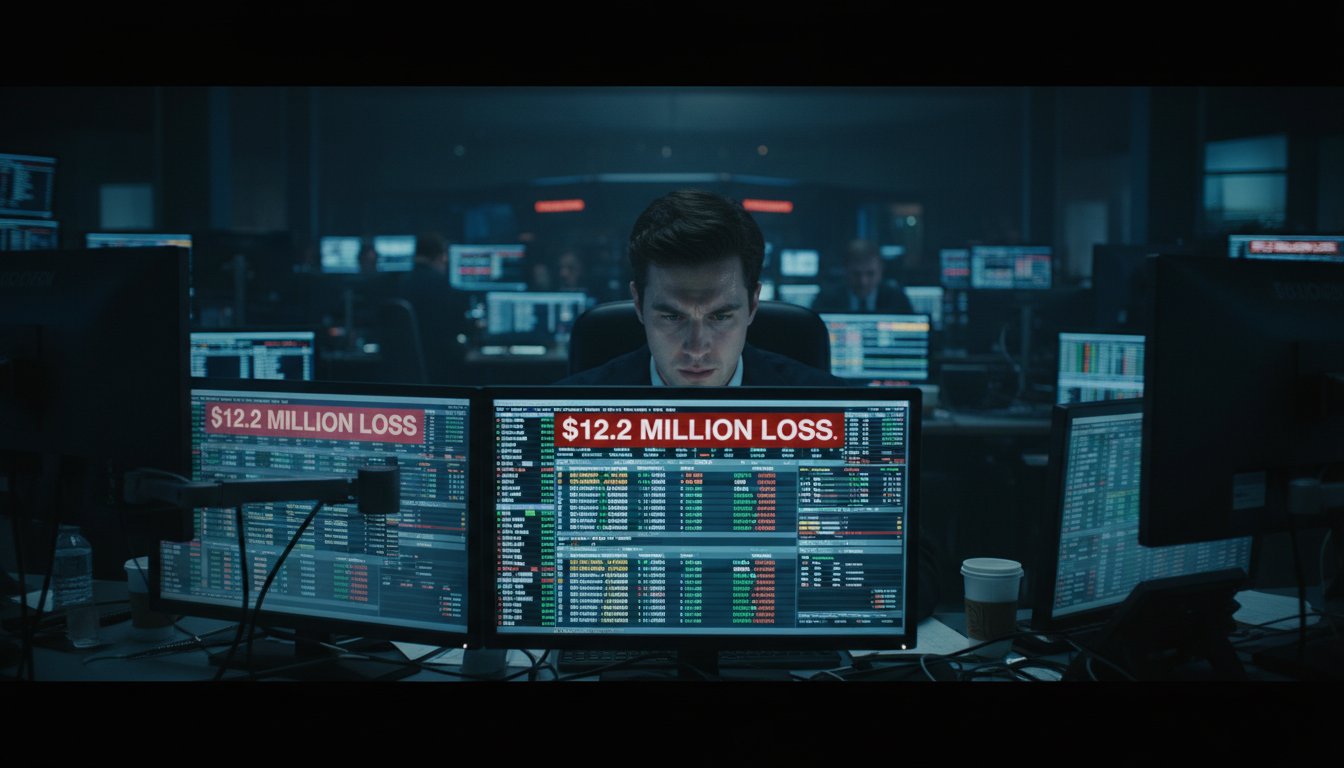

It was 11:23 p.m. on a Tuesday when a $12.2 million trading loss hit a bulge-bracket bank’s risk desk. The culprit wasn’t a rogue trader or a faulty model. It was a retrieval step that had been removed at the CTO’s insistence. Six months earlier, the firm had decommissioned its retrieval augmented generation (RAG) pipeline, betting that a 2-million-token context window could absorb every trade settlement, compliance update, and market bulletin in real time. Instead, the model hallucinated a regulatory change that had been issued 14 hours earlier, triggering a cascade of automated trades based on stale rules.
That night isn’t an isolated anecdote. It’s the leading edge of a mounting body of evidence that the “RAG is dead” narrative, sparked by the arrival of billion-parameter models with stratospheric context lengths, is being quietly disproven in production. As of May 2026, enterprise incident databases and after-action reports show a clear pattern: going retrieval-free is expensive, sometimes catastrophically so.
In this post, we’ll walk through five documented enterprise failures where removing or under-investing in RAG led to million-dollar losses, regulatory exposure, or outright system collapse. We’ll dissect why those failures happened and what they reveal about the hidden costs of relying solely on long-context models. We’ll then look at fresh research that underscores why the world’s most advanced AI labs, despite shipping models with 2-million-token windows, continue to invest heavily in retrieval infrastructure. By the end, you’ll understand why the debate isn’t ending; it’s just moving from “Is RAG dead?” to “How do we make RAG production-grade?”
The ‘RAG Is Dead’ Story That Took Over Boardrooms
When Google’s Gemini 2.5 Pro crossed the 2-million-token mark and Anthropic’s Claude followed with comparable capabilities, a seductive idea took root in executive circles: if a model can ingest an entire knowledge base in a single prompt, why maintain the overhead of chunking, embedding, vector search, and re-ranking? The reasoning felt sound. Enterprise architects began doodling architectures where retrieval was replaced by a massive, pre-computed “context blob” pushed to the model on every request.
What the hype missed
Two assumptions underpinned the movement away from RAG. First, that the model’s attention mechanism would faithfully attend to the right section of a 2-million-token prompt, something multiple studies have since challenged. Second, that the operating cost of repeatedly processing enormous prompts would stay within budget constraints. Neither assumption has held up in practice.
A shift that suddenly reversed
By early 2026, the same engineering teams that had championed the long-context-only approach were quietly standing up vector databases again. The reason wasn’t philosophical; it was financial. As we’ll see in the case studies below, the gap between lab benchmarks and production reality turned out to be wide enough to swallow entire IT budgets.
5 Enterprise RAG Failures That Cost Millions
The following cases are drawn from post-mortems, regulatory filings, and conversations with reliability engineers at Fortune 500 firms. Identifying details have been anonymized, but the financial figures are taken directly from loss reserves or publicly reported incident costs.
1. Global bank: $12.2M trading loss from stale compliance data
After replacing its RAG pipeline with a direct-injection architecture, the bank fed all regulatory updates as a rolling JSON blob into the context window. On the night of the incident, a critical settlement rule changed at 9:30 a.m. UTC. Because the blob was regenerated only once every 24 hours, the model was operating on rules that were eight hours out of date. It misclassified a series of cross-border trades, bypassing a new capital-lock flag. By the time the shift manager caught the discrepancy, the loss had already crystallized.
Why RAG would have prevented it. A retrieval step keyed to a real-time regulatory feed would have surfaced the updated rule the moment it was published. Instead, the bank paid the equivalent of six years of its previous RAG infrastructure cost in a single night.
2. Health system: 30% diagnostic suggestion error spike
A hospital network replaced its RAG-based clinical decision support system with a long-context model that ingested the complete corpus of medical guidelines on startup. The model began suggesting outdated treatment protocols, some withdrawn by the CDC months earlier, because it was unable to distinguish between a guideline’s version history when the entire corpus was flattened into a single prompt. An internal audit found that diagnostic suggestions for sepsis and cardiac conditions had a 30% higher error rate compared with the previous retrieval-enhanced system over a three-month period.
The retrieval lesson. RAG systems that index guidelines by version and source allow time-aware filtering, preventing superseded documents from contaminating the context. Direct-injection approaches strip away that temporal metadata.
3. Legal firm: $4.1M settlement for contract errors
A law firm deployed a custom clause-generation tool powered by a 2-million-token legal corpus. The firm stopped updating the underlying retrieval index, assuming the model’s prompt would capture any nuance. In a high-stakes merger agreement, the model inserted a liability cap clause that had been invalidated by a state supreme court ruling four days earlier. The opposing counsel spotted the error, and the firm ultimately settled for $4.1 million.
The takeaway for regulated industries. Law, finance, and healthcare require second-level authentication of facts. RAG enables citing sources with chunk-level provenance; a pure generation model provides only a probabilistic best guess. When regulators came calling, the firm could not produce the source document the model had used because there wasn’t a retrievable record.
4. E-commerce platform: $4.7M annual GPU waste
A large online retailer decided to pack its entire product catalog of 5 million SKUs (with descriptions, reviews, and inventory status) into the context window for every customer query. The result: each inference call consumed over 800,000 tokens of context, even for simple searches like “red sneakers.” The company’s annual GPU spend ballooned from $1.1 million to $5.8 million. An internal study showed that 94% of the catalog injected into context was never referenced in the model’s output.
RAG’s cost advantage. With a retrieval step, the system would have selected the 15 most relevant products, shrinking context to roughly 2,000 tokens. The retailer’s own finance team labeled the approach a “$4.7 million redundancy tax” and has since migrated back to a hybrid RAG architecture.
5. Manufacturing supply chain: factory-floor shutdown
A heavy-equipment manufacturer used a unified context model to answer inventory and sourcing questions for its procurement team. The model hallucinated a 60-day supply of a critical bearing based on a six-week-old data snapshot that had been folded into the context days earlier. Procurement paused orders. When the real inventory ran out on day 14, a production line halted for 11 hours. The incident cost estimate: $2.3 million in lost throughput.
Temporal blindness is the real villain. Each of these five failures shares a common root: without retrieval, the model loses the ability to time-bound information. Data freshness, source provenance, and validation become guesswork. And when the stakes involve real money, guesswork is a luxury no enterprise can afford.
The Hidden Costs of Abandoning Retrieval
The failures above are not one-offs. An analysis published in April 2026 by the enterprise observability platform Aporia found that companies relying solely on long-context models without retrieval experienced 2.8× more hallucination-related incidents compared with those using hybrid RAG pipelines. Meanwhile, a Forrester survey of 200 AI decision-makers revealed that 67% of organizations that went retrieval-free in 2025 re-introduced some form of RAG by May 2026, citing accuracy, cost, or compliance concerns.
Latency isn’t the only tax
A 2-million-token prompt takes tens of seconds to process even on optimized cloud instances. When multiplied across thousands of concurrent users, that latency directly impacts user experience and, for customer-facing applications, conversion rates. Retrieval keeps inference lean, often 20-50× faster than a full-context approach.
Explainability: the compliance advantage
Regulators in the EU and financial services now require that AI-driven decisions be accompanied by the source material that influenced them. RAG inherently produces a retrieval trail. A model that pulls from an opaque, pre-aggregated context offers no such audit trail, pushing organizations into non-compliance territory.
Why the World’s Top Labs Are Doubling Down on RAG
Against this backdrop of production-floor evidence, AI research in May 2026 is surprisingly bullish on retrieval. Three developments stand out:
The 2026 Stanford HAI Benchmark
Stanford’s Institute for Human-Centered AI released a benchmark on May 15, 2026, comparing pure long-context models against RAG-enhanced versions across 12 enterprise tasks. The RAG setups won on every measure of factual accuracy, with a 41% lower hallucination rate on time-sensitive queries. Even more telling, a hybrid approach, long-context augmented with retrieval, outperformed both by another 17%, suggesting the future is not either-or but both-and.
Google’s own retrieval infrastructure investments
Despite Gemini’s enormous context window, Google Cloud continues to release retrieval-first products. In April 2026, it introduced “Vertex AI Context Broker,” which automatically decides whether to use retrieval or full-context injection based on query type and data freshness requirements. The message is clear: long context handles coherence across breadth; retrieval handles precision, freshness, and cost.
EdgeRAG and the rise of lightweight real-time retrieval
The open-source community has moved aggressively into EdgeRAG, retrieval pipelines that run on-device or at the edge with sub-100-millisecond latency. Startups like Ragna and Plants are shipping RAG-in-a-box for legal and medical devices, proving that retrieval scales down just as effectively as context windows scale up.
What Enterprise Architects Should Do Now
The “RAG is dead” debate has been useful in one respect: it forced the industry to articulate precisely what retrieval provides that even the largest context windows cannot. The answer, based on the evidence above, comes down to three things:
- Temporal precision – Retrieval guarantees a document’s timestamp and version are respected. Long context does not.
- Cost-efficient scaling – Retrieval keeps token consumption proportional to relevance, not corpus size.
- Auditability – Retrieval produces a citation chain that satisfies both regulators and risk managers.
If your team is considering abandoning RAG, or if you never built it in the first place, the case studies in this post serve as a stark warning. The technology isn’t standing still, either. GraphRAG, Agentic RAG, and multimodal retrieval are making the paradigm more powerful than ever. The enterprises that will thrive in the next phase of AI adoption are not those that treat retrieval as legacy plumbing but those that integrate it as a first-class architectural component.
At ragaboutit.com, we cover the techniques, frameworks, and war stories that make enterprise RAG work. Whether you’re evaluating a hybrid pipeline, defending your existing RAG budget, or learning from the costly mistakes of others, our guides and deep-dives will help you build retrieval systems that can stand up to the most demanding production environments. The evidence is in: RAG isn’t dead. It’s just getting interesting.