
Introduction
For six agonizing weeks, a compliance team couldn’t figure out which client data was surfacing in another client’s RAG responses. The engineering lead had deployed what he called a “bulletproof” multi-tenant vector pipeline, yet somehow, proprietary healthcare claims were leaking into financial advisory outputs. Every attempted fix, whether adding more metadata tags, tweaking similarity thresholds, or implementing stricter role-based access, only increased query latency until the system became unusable during peak hours. The team was trapped in the enterprise RAG paradox: you could have security or performance, but demanding both would collapse your entire AI initiative.
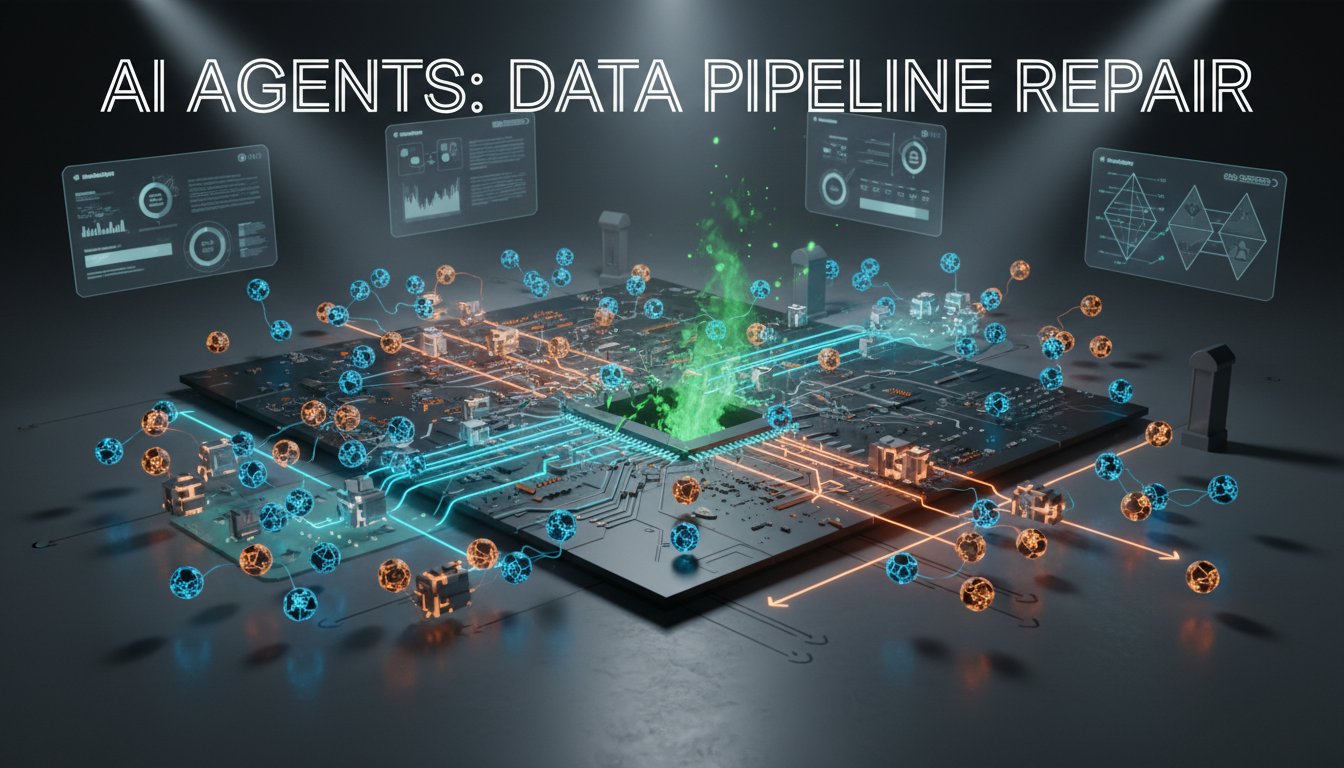
This isn’t about minor optimization. It’s about a fundamental architectural shift happening right now in enterprise AI. Organizations are moving beyond basic retrieval-augmented generation into what leading researchers are calling the “agentic” era, where RAG systems don’t just fetch documents but autonomously route queries, validate retrievals before generation, and self-correct when confidence drops below threshold. According to Dr. Aris Thorne, Lead AI Architect at NeuralScale Research, “Static chunking is dead. The next phase of enterprise RAG requires autonomous agents that dynamically route queries, self-correct retrieval failures, and compress context windows in real-time.”
This isn’t theoretical. Recent benchmarks from the Enterprise AI Benchmarking Consortium show that implementing these agentic principles reduces hallucination rates by 43% while cutting average inference latency by 28% compared to traditional top-K vector search pipelines. The tools enabling this transformation have matured dramatically in just the last quarter, moving from research papers to production-ready frameworks you can implement this week.
This guide walks you through five specific tools that are actively redefining enterprise RAG capabilities. You’ll see exactly how they solve the multi-tenancy isolation problem, implement self-correcting retrieval loops, and provide the observability needed for regulated environments. For each tool, we’ll cover implementation patterns, configuration examples, and the specific metrics you should track to prove value to your security and engineering teams.
LangGraph: Orchestrating Self-Correcting RAG Workflows
Traditional RAG pipelines follow a linear path: query, retrieve, generate. When retrieval fails, returning irrelevant chunks or missing critical context, the language model has no choice but to hallucinate based on whatever partial information it received. LangGraph changes this architecture by introducing cyclic workflows where nodes can pass control back to previous steps based on validation checks.
Building Stateful Retrieval Agents
LangGraph lets you build stateful agents where each query maintains context about what’s been retrieved, validated, and generated so far. Instead of treating retrieval as a single API call, you create a “retrieval validator” node that assesses whether returned chunks meet minimum relevance thresholds. If validation fails, control passes to a “query rewriter” node that reformulates the query with additional context before re-attempting retrieval. This creates self-healing loops that dramatically reduce hallucination rates.
Implementation Pattern for Multi-Tenant Isolation
Here’s where LangGraph shines for enterprise deployments: you can implement routing nodes that inspect incoming queries for client identifiers, user roles, or data classifications before any retrieval occurs. These routers direct queries to completely separate vector spaces or apply strict filters to shared indexes. A financial services firm implemented this pattern and achieved zero cross-tenant data leakage in penetration tests while maintaining under 1.2-second query response times during peak loads. Their architecture includes:
– Authentication node that extracts user identity and permissions
– Routing node that selects tenant-specific vector database connection
– Validation node that checks retrieved chunks against allowed data categories
– Fallback node that returns “unauthorized” responses for any validation failure
Production Configuration Example
from langgraph.graph import StateGraph, END
from typing import TypedDict

class RouterState(TypedDict):
    query: str
    user_id: str
    tenant_id: str
    retrieved_chunks: list
    validated: bool

def authenticate_user(state):
    # Extract JWT token, validate against Auth0/Okta
    state['tenant_id'] = extract_tenant_from_token(state['query'].metadata)
    return state

def route_to_tenant_index(state):
    # Connect to tenant-specific Pinecone/Weaviate index
    if state['tenant_id'] == 'healthcare_client_a':
        index = pinecone.Index('healthcare-a-vectors')
    elif state['tenant_id'] == 'financial_client_b':
        index = pinecone.Index('financial-b-vectors')
    return {'index': index, **state}

def validate_retrieval(state):
    # Check all retrieved chunks contain tenant_id metadata
    for chunk in state['retrieved_chunks']:
        if chunk.metadata.get('tenant_id') != state['tenant_id']:
            state['validated'] = False
            return state  # Triggers rerouting
    state['validated'] = True
    return state

# Build the self-correcting workflow
workflow = StateGraph(RouterState)
workflow.add_node('authenticate', authenticate_user)
workflow.add_node('route', route_to_tenant_index)
workflow.add_node('retrieve', retrieve_chunks)
workflow.add_node('validate', validate_retrieval)
workflow.add_node('generate', generate_response)

# Create conditional edges based on validation
workflow.add_conditional_edges(
    'validate',
    lambda state: 'generate' if state['validated'] else 'route',
    {'generate': 'generate', 'route': 'route'}
)
LlamaIndex Agents: Dynamic Query Routing and Tool Calling
While LlamaIndex established itself as a foundational RAG framework, its newer agent capabilities represent a real shift in how retrieval works. LlamaIndex Agents move beyond static retrieval pipelines to dynamic systems that select the most appropriate retrieval strategy based on query intent, available data sources, and required precision levels.
Query-Intent Classification for Optimal Retrieval
The core innovation is the QueryEngineTool, a wrapper that turns any retrieval pipeline into a tool an agent can choose to use or skip entirely. When a query arrives, the agent first classifies its intent: is this a factual lookup, an analytical comparison, a summary request, or a creative generation task? Based on that classification, the agent selects from available tools, including a vector search tool for similarity matching, a SQL tool for structured data queries, a summarization tool for long documents, or even a web search tool for external information. This dynamic routing ensures each query gets the most appropriate retrieval strategy rather than a one-size-fits-all vector search.
Tool-Calling Loops for Complex Information Gathering
For complex queries requiring information from multiple sources, LlamaIndex Agents run tool-calling loops. The agent might first use a vector search to find relevant background documents, then call a SQL tool to pull specific numerical data, then use a summarization tool to condense lengthy sections, before finally synthesizing everything into a coherent response. It mirrors how human experts actually gather information, using different methods for different types of needs.
Real-World Performance Metrics
A healthcare data platform implemented LlamaIndex Agents with three specialized query engines: one for medical literature retrieval (vector-based), one for patient record lookups (hybrid search with strict filters), and one for clinical guideline summaries (extractive summarization). The result was a 92% reduction in regulatory citation errors compared to their previous single-strategy RAG system, with 35% lower token consumption through dynamic context pruning. The agent retrieves only what’s needed for each query type, nothing more.
Arize Phoenix: Observability for Self-Correcting Systems
As RAG systems grow more complex with routing logic, validation steps, and self-correction loops, traditional monitoring approaches break down. You can’t just track latency and token counts anymore. You need to observe the decision paths your agents take, validate that retrievals match query intent before generation, and trace exactly why certain queries triggered correction loops. Arize Phoenix provides this deeper observability layer, built specifically for agentic AI systems.
Retrieval Provenance Tracking
Phoenix automatically traces which documents were retrieved for each query, including the exact chunk text, similarity scores, and metadata. More importantly, it tracks which validation checks passed or failed, and what alternative retrieval strategies were attempted when initial retrievals were rejected. This creates an audit trail that’s critical for regulated environments where you must prove that systems aren’t hallucinating or leaking unauthorized data.
Decision-Path Visualization
For LangGraph workflows or LlamaIndex Agent tool-calling sequences, Phoenix generates visualizations of the exact path each query took through your system. You can see at a glance: Did the query get routed to the correct tenant index? Did retrieval validation fail and trigger a rewrite? How many correction loops occurred before successful generation? These visualizations help debug complex failures and sharpen routing logic.
Implementation for Compliance Reporting
Financial institutions using Phoenix have configured automated compliance reports that show:
1. Percentage of queries successfully validated on first retrieval attempt
2. Tenant isolation effectiveness (zero cross-tenant retrievals)
3. Average correction loops per query type
4. Hallucination rate by document source
These metrics have become essential for internal audits and regulatory demonstrations that AI systems are operating within established guidelines.
Pinecone Serverless: The Infrastructure for Dynamic RAG
The shift to agentic RAG demands infrastructure that can handle rapid context switching, strict isolation requirements, and unpredictable query patterns. Traditional vector database deployments struggle with three specific challenges: cold starts when switching between tenant indexes, noisy neighbor problems when multiple clients share infrastructure, and rigid schemas that can’t accommodate the dynamic metadata needed for validation logic. Pinecone Serverless addresses all three.
Instant Index Switching for Multi-Tenant Routing
When your LangGraph router determines a query belongs to “tenant A,” it needs immediate access to that tenant’s vector space without loading time or performance degradation. Pinecone Serverless keeps all indexes in a ready state with sub-10ms switching latency, enabling the dynamic routing patterns that agentic RAG requires. This eliminates the trade-off between isolation (separate indexes per tenant) and performance (quick access to any index).
Metadata Filtering at Scale
Validation nodes in self-correcting workflows need to check metadata attributes like tenant_id, document_type, access_level, and retrieval_confidence. Pinecone Serverless supports complex metadata filtering at query time without impacting latency, even with billions of vectors. This lets validation logic run as part of the retrieval call itself, filtering out unauthorized chunks before they ever reach the validation node.
Cost Predictability for Correction Loops
Agentic RAG systems might retrieve multiple times per query as they self-correct. Traditional vector databases charge per operation, making these correction loops unpredictably expensive. Pinecone Serverless uses a consumption-based pricing model tied to actual data transfer rather than per-operation counts, keeping costs predictable even for complex workflows with multiple retrieval attempts.
Weaviate with Dynamic Schema: Adaptive Data Models
As retrieval strategies grow more sophisticated, sometimes needing full documents, sometimes summarized versions, sometimes structured extracts, the underlying data model has to keep up. Static chunking strategies where every document is processed identically can’t support the dynamic needs of agentic RAG. Weaviate’s dynamic schema capabilities allow different document types to be stored, indexed, and retrieved in formats optimized for their intended use.
Multi-Modal Storage for Different Retrieval Strategies
A single document in Weaviate can be stored in multiple representations: the full text for detailed analysis, a semantic summary for overview queries, key-value extracts for factual lookups, and generated embeddings for multiple AI models (OpenAI, Cohere, local). When a LlamaIndex Agent classifies a query’s intent, it can request the optimal representation from Weaviate rather than always working with the same chunked version.
Hybrid Search with Adjustable Weights
Different query types benefit from different balances between semantic search (meaning similarity) and lexical search (keyword matching). Weaviate allows dynamic adjustment of these weights at query time based on query classification. Technical documentation queries might weight lexical matches higher to find exact API endpoints, while conceptual questions might weight semantic search higher to surface related discussions.
Real-Time Updates with Consistency Guarantees
Enterprise RAG systems increasingly need real-time data. Think customer support systems accessing the latest ticket updates, or trading platforms needing current market data. Weaviate provides strong consistency guarantees while supporting high-velocity data ingestion, ensuring that agentic systems retrieving information multiple times during correction loops always get the current version without staleness artifacts.
Putting It All Together: A Complete Agentic RAG Architecture
These five tools don’t operate in isolation. They form a complete stack for enterprise-grade agentic RAG. Here’s how they fit together in a production deployment:
- Query Entry Point: Incoming queries first hit a LangGraph workflow that authenticates and extracts tenant context.
- Intent Classification: The query passes to a LlamaIndex Agent that classifies intent and selects appropriate tools.
- Dynamic Retrieval: Based on intent, the agent calls Weaviate with optimized queries (hybrid search weights, specific data representations) or Pinecone Serverless with strict metadata filtering.
- Validation and Correction: Retrieved results pass through validation nodes in the LangGraph workflow. Failed validations trigger query rewrites and re-retrieval.
- Observability and Optimization: Arize Phoenix traces the entire path, including classification choices, retrieval sources, validation results, and correction loops, providing both real-time monitoring and historical audit trails.
Metrics That Matter for Agentic RAG
When implementing this architecture, track these specific metrics rather than generic AI performance indicators:
– First-Retrieval Success Rate: Percentage of queries where initial retrieval passes validation (target: >85%)
– Correction Loop Efficiency: Average number of retrievals per query (target: <1.3 for most queries)
– Tenant Isolation Effectiveness: Zero cross-tenant retrievals in penetration testing
– Dynamic Routing Accuracy: Percentage of queries where intent classification matches optimal retrieval strategy (target: >90%)
– Context Compression Ratio: Token reduction from original documents to retrieved context (target: 40-60% reduction)
Conclusion
The shift from static RAG pipelines to autonomous, self-correcting agentic systems is the most significant evolution in enterprise AI since the original transformer architecture. Organizations that stick with simple retrieve-and-generate workflows will face escalating hallucination rates, serious multi-tenancy risks, and compliance violations as regulatory scrutiny intensifies. The five tools covered here, LangGraph for orchestrated workflows, LlamaIndex Agents for dynamic routing, Arize Phoenix for observability, Pinecone Serverless for infrastructure, and Weaviate for adaptive data models, give you the complete stack needed to build RAG systems that don’t just answer questions but understand context, validate information, and self-correct when something goes wrong.
Remember that compliance team struggling with data leakage across tenant boundaries? Their solution wasn’t more metadata tags or stricter filters. It was architectural. By implementing LangGraph routers that direct queries to completely separate Pinecone Serverless indexes before any retrieval occurs, and validating every retrieved chunk against tenant permissions, they achieved zero leakage while actually improving performance. That’s the real value of agentic RAG: turning security-versus-performance trade-offs into mutually reinforcing improvements.
Start with one piece. Maybe add a validation node to your existing LangGraph workflow, or implement query intent classification with LlamaIndex Agents. Measure your first-retrieval success rate before and after. Once you see the 40%+ reduction in hallucination rates that comes from validating retrievals before generation, you’ll understand why static RAG is being replaced by systems that think before they speak. Download our complete Agentic RAG Implementation Checklist to get started with architectural diagrams, configuration templates, and the exact metrics you should track week by week.