
If you’ve built a RAG prototype that works beautifully in testing but crumbles under production load, you’re not alone. You’re part of the 80% statistic—the vast majority of enterprise RAG projects that never make it past the proof-of-concept stage. The technical reasons vary: data quality issues, retrieval drift, context management failures, integration nightmares. But the underlying pattern is consistent: moving from “it retrieves documents” to “it orchestrates reliable, multi-step workflows in production” remains the widest chasm in enterprise AI.
Contextual AI’s latest announcement signals that the industry is finally addressing this orchestration gap head-on. Their Agent Composer platform, launched January 27, 2026, isn’t just another RAG tool—it’s a production orchestration layer designed to transform existing RAG systems into coordinated, multi-step AI agents without requiring teams to rebuild from scratch. The timing matters. As RAG architectures evolve from simple document retrieval to complex reasoning workflows, the infrastructure demands have exploded. Teams need orchestration, safety barriers, deterministic controls, and visual workflow management—capabilities that DIY RAG stacks struggle to provide at scale.
This isn’t about RAG being “dead” or replaced. It’s about recognizing that retrieval is just the first step. The real enterprise value emerges when retrieval becomes orchestration—when your system can coordinate multiple tools, enforce business rules, maintain context across steps, and recover gracefully from failures. Agent Composer represents a bet that most teams don’t want to build this orchestration infrastructure themselves. They want to focus on their domain logic, not on building yet another workflow engine.
The Orchestration Layer Your RAG Stack Is Missing
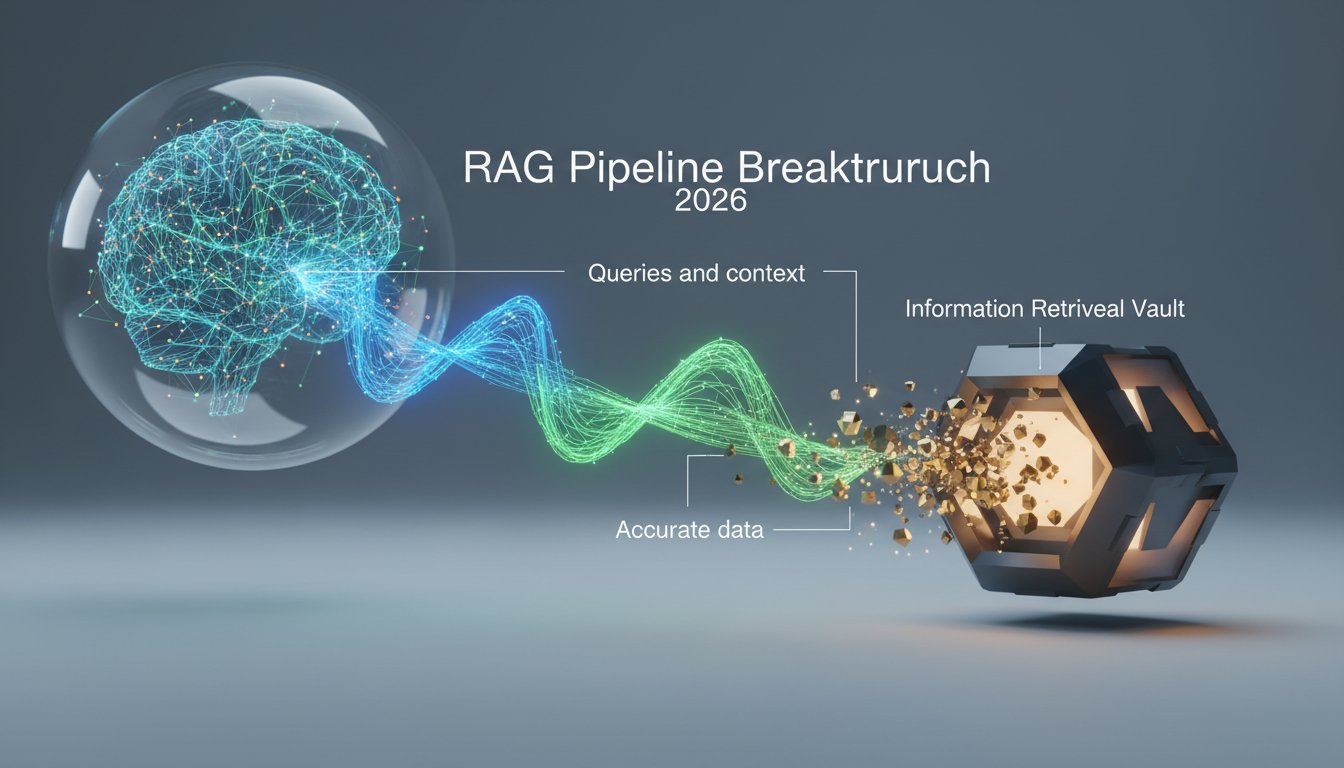
Traditional RAG follows a straightforward pattern: query comes in, embeddings retrieve relevant documents, LLM generates response using retrieved context. This works for simple Q&A scenarios. But enterprise use cases demand more—approval workflows, multi-system integrations, conditional logic, audit trails, rollback capabilities. The gap between “retrieve and generate” and “orchestrate and execute” is where most teams hit the production wall.
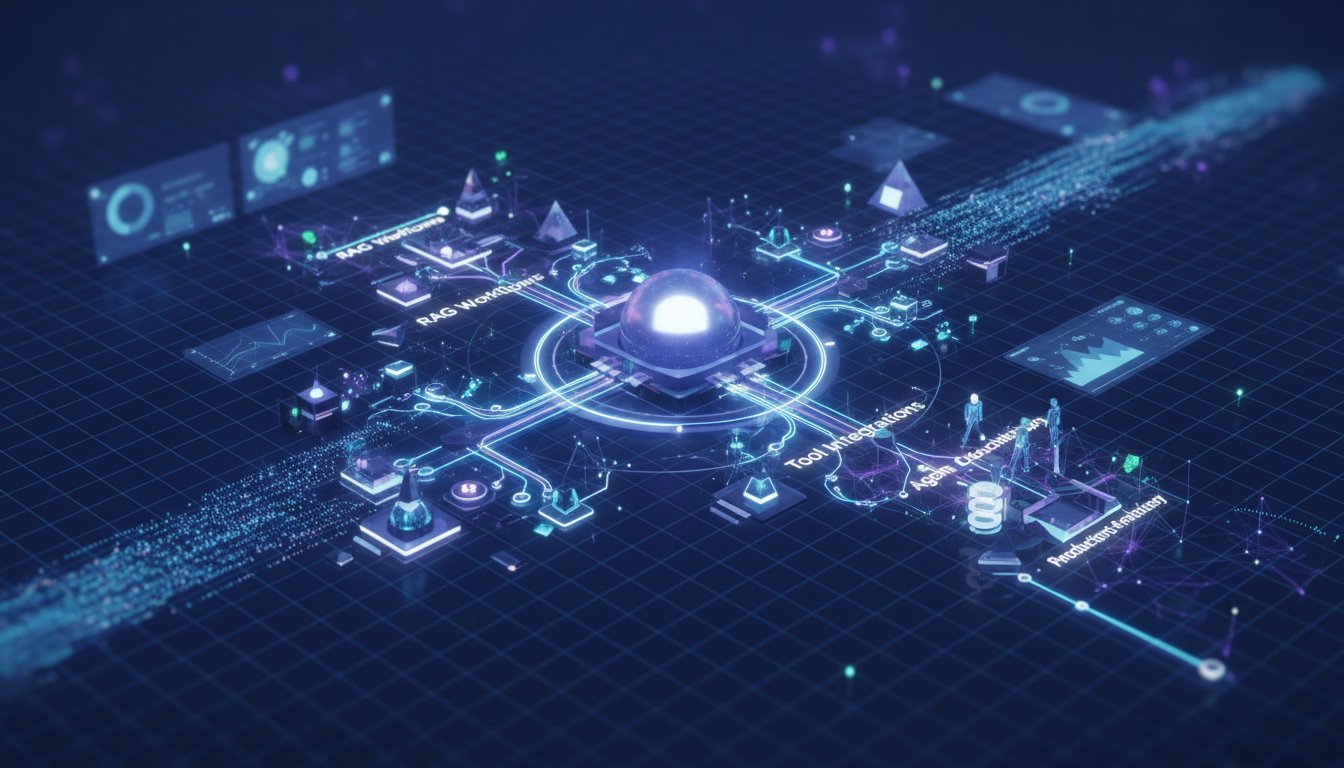
Agent Composer addresses this by introducing a visual orchestration layer that sits above your existing RAG infrastructure. Think of it as workflow orchestration specifically designed for AI operations. You’re not replacing your vector database or embedding models—you’re adding coordination capabilities that let you chain retrievals, integrate external APIs, apply business rules, and handle errors systematically.
The platform offers several architectural components that production RAG systems typically lack:
Visual Workflow Design
Instead of hardcoding agent behaviors in Python scripts scattered across repositories, Agent Composer provides drag-and-drop workflow composition. This matters more than it sounds. When your RAG system needs to coordinate a document retrieval, validate against a compliance database, call an external API for enrichment, and then route to different LLMs based on sensitivity classification—visual orchestration becomes the difference between manageable complexity and unmaintainable spaghetti code.
The visual approach also democratizes agent development. Your domain experts can design workflows without waiting for engineering bandwidth. They can see the orchestration logic, understand decision points, and iterate on workflow design without diving into code. This doesn’t eliminate engineering—it shifts engineers toward building reliable components while domain experts compose them into workflows.
Blending Deterministic Rules with Dynamic Reasoning
One of the most compelling aspects of Agent Composer is its hybrid execution model. Not every step in an enterprise workflow should be probabilistic. When you’re processing financial transactions, certain validation steps must be deterministic—no hallucinations, no creative interpretations, just reliable rule execution.
Agent Composer lets you mark specific workflow steps as deterministic while allowing others to leverage LLM reasoning. Your retrieval step might use semantic search (probabilistic), but your data validation step enforces exact business rules (deterministic). Your analysis step might generate insights using an LLM (probabilistic), but your approval routing follows strict organizational hierarchy (deterministic).
This hybrid model addresses a critical production challenge: how do you build AI systems that are both intelligent and reliable? The answer isn’t choosing one or the other—it’s orchestrating both in the same workflow with clear boundaries between them.
Safety Barriers and Reliability Enforcement
Production AI systems need guardrails. Agent Composer introduces safety barriers at the orchestration level—constraints that prevent agents from taking actions outside acceptable parameters. These aren’t prompt engineering tricks or gentle suggestions to the LLM. They’re infrastructure-level controls enforced by the orchestration layer.
Consider a RAG agent that recommends code changes. A safety barrier might prevent any recommendations that modify authentication logic without explicit human approval. Or a customer service agent that can issue refunds—a safety barrier might cap refund amounts or require manager approval for edge cases. These controls exist in the workflow orchestration, not in fragile prompt instructions that can be circumvented.
The reliability benefits compound in production. When orchestration is explicit and visible, debugging becomes tractable. You can see which step failed, inspect the context at that point, and replay the workflow with modifications. Compare this to debugging a monolithic RAG system where failures are buried in LLM reasoning and error messages are vague hallucinations.
Why the Production Gap Keeps Widening
The 80% failure rate for enterprise RAG projects isn’t random bad luck—it’s a structural problem. RAG prototypes optimize for different constraints than production systems. Prototypes prioritize speed of development and proof of concept. Production systems need reliability, observability, security, compliance, cost management, and graceful degradation.
The gap widens because the skills and infrastructure required are fundamentally different. Building a RAG prototype requires ML expertise and understanding of embeddings. Building production orchestration requires distributed systems knowledge, workflow design, error handling, monitoring, and integration architecture. Most teams have the first skill set but not the second.
Contextual AI’s bet is that teams shouldn’t need to become orchestration experts to deploy production RAG agents. They should use orchestration infrastructure built by specialists, just as they use vector databases built by database specialists rather than implementing their own indexing structures.
The Integration Reliability Challenge
RAG systems in production rarely operate in isolation. They need to call internal APIs, query multiple databases, integrate with external services, and coordinate with existing enterprise systems. Each integration point is a potential failure mode. API rate limits, network timeouts, authentication token expiration, schema changes, downstream service degradation—production integrations face all of these routinely.
Agent Composer provides integration orchestration specifically designed for AI workflows. It handles retries with exponential backoff, manages authentication token refresh, provides circuit breakers for failing services, and offers fallback strategies when integrations fail. These are standard patterns in microservices architecture, but they’re often missing in RAG implementations because teams are focused on the AI components.
The result: RAG prototypes that work perfectly until they need to call a flaky internal API, at which point the entire workflow hangs or fails silently. Production orchestration anticipates these failures and designs workflows that degrade gracefully.
The Context Management Problem
Simple RAG systems retrieve context once per query. Multi-step agent workflows need to maintain context across multiple interactions, accumulate information from different sources, and decide when to retrieve additional context versus using existing information. Context management becomes a state management problem—and state management in distributed systems is notoriously difficult.
Agent Composer’s orchestration model includes explicit context management. Each workflow step can read from and write to shared context. The orchestration layer handles context serialization, ensures consistency, and provides visibility into what context each step is using. This turns implicit context passing (buried in LLM conversations) into explicit state management (visible in the workflow).
When debugging a failed workflow, you can inspect the context at each step. When optimizing performance, you can see which steps are accumulating unnecessary context. When ensuring security, you can verify that sensitive information isn’t leaking between workflow stages. Explicit context management makes all of this possible.
The Build vs. Buy Calculus Is Shifting
For years, the prevailing wisdom in enterprise AI was to build custom solutions. Every organization’s data is unique, every use case has special requirements, every team has specific constraints. Building custom seemed like the only path to solutions that truly fit.
But orchestration infrastructure is emerging as a layer where customization provides diminishing returns. The patterns for reliable workflow execution, error handling, monitoring, and integration are well-understood. Building yet another workflow engine doesn’t differentiate your RAG system—it just delays production deployment while you reinvent orchestration primitives.
Agent Composer represents a bet that orchestration should be infrastructure—something you use rather than build. Your differentiation comes from your domain-specific workflows, your proprietary data, your unique business logic. The orchestration layer that executes those workflows can be standardized infrastructure.
This doesn’t mean Agent Composer is the only option or even the right option for every team. But it signals an industry shift: RAG is maturing from experimental technology to production infrastructure, and production infrastructure needs production-grade orchestration.
When to Consider Orchestration Platforms
Not every RAG project needs enterprise orchestration on day one. If you’re building a simple document Q&A system with straightforward retrieval and no integrations, adding orchestration infrastructure is premature optimization. But several signals indicate you’re hitting the orchestration gap:
Your workflows have multiple steps. If a single user request requires retrieving documents, calling external APIs, performing calculations, and generating multiple responses, you’re doing orchestration whether you call it that or not. The question is whether you’re doing it explicitly (with orchestration tools) or implicitly (with scattered code).
You need deterministic guarantees. When certain steps must execute reliably with exact business logic—no probabilistic behavior allowed—you need clear separation between deterministic and probabilistic execution. Orchestration platforms provide this separation at the infrastructure level.
Integration failures are causing production issues. If your RAG system works perfectly until an external API times out, and then fails catastrophically, you need better integration orchestration. Retry logic, circuit breakers, and fallback strategies shouldn’t be custom code you write—they should be orchestration features you configure.
You can’t debug failures effectively. When workflows fail and you can’t trace what happened, explicit orchestration provides the observability you’re missing. Workflow execution history, context inspection, and step-level logging become available when orchestration is explicit.
You’re rebuilding workflow infrastructure. If you find yourself building task queues, state machines, retry mechanisms, and workflow visualization tools—you’re building orchestration infrastructure. Consider whether your time is better spent on domain logic using existing orchestration platforms.
What Agent Composer Doesn’t Solve
Context-aware analysis requires honest assessment of what any platform provides—and what remains your responsibility. Agent Composer addresses orchestration, but several critical RAG challenges remain outside its scope.
Data Quality Is Still Your Problem
Orchestration can’t fix garbage data. If your source documents are outdated, inconsistent, poorly structured, or full of errors, Agent Composer won’t magically improve them. The “garbage in, garbage out” principle applies regardless of how sophisticated your orchestration becomes.
You still need data governance, quality monitoring, continuous updates, and validation pipelines. Agent Composer can orchestrate these processes, but it can’t replace them. The platform provides infrastructure for workflows—you still need to design workflows that ensure data quality.
Embedding and Retrieval Strategy Remains Critical
How you chunk documents, generate embeddings, structure metadata, and retrieve relevant context—all of this remains your responsibility. Agent Composer orchestrates retrieval workflows, but it doesn’t make retrieval decisions for you.
If your chunking strategy produces incoherent fragments, if your embedding model doesn’t capture domain terminology, if your retrieval returns irrelevant documents—orchestration won’t fix these problems. You still need expertise in retrieval architecture, embedding selection, and relevance tuning.
Model Selection and Prompt Engineering Still Matter
Agent Composer orchestrates LLM interactions but doesn’t choose models or craft prompts for you. If your prompts produce hallucinations, if your model lacks domain knowledge, if your generation quality is poor—these remain problems you must solve.
The platform provides structure for where and how LLMs fit into workflows, but the effectiveness of those LLMs depends on your choices. Orchestration makes it easier to swap models, test alternatives, and route different queries to different LLMs—but it doesn’t eliminate the need for model expertise.
The Migration Path from Simple RAG
If you’re running a RAG system in production today, the question isn’t whether orchestration matters—it’s how to add orchestration without rebuilding everything. Agent Composer’s design anticipates this by providing integration points with existing RAG infrastructure.
The migration path typically follows this pattern:
Step 1: Identify orchestration points in your current workflow. Map out what happens when a query arrives. Where do you retrieve documents? Where do you call external systems? Where do you apply business rules? These become workflow steps in the orchestration model.
Step 2: Start with one complex workflow. Don’t migrate everything at once. Choose your most complex workflow—the one with the most integration points, the most conditional logic, the most error handling. Rebuild that workflow in the orchestration platform. Learn the patterns. Understand the tradeoffs.
Step 3: Add deterministic controls where reliability matters. Identify workflow steps where probabilistic behavior is unacceptable. Extract business rules from prompt instructions and implement them as deterministic workflow logic. This improves reliability and makes rules visible and auditable.
Step 4: Improve observability and error handling. Once workflows are explicit, add monitoring, logging, and error recovery strategies. This is where orchestration platforms provide immediate value—capabilities that would take weeks to build are available through configuration.
Step 5: Expand to additional workflows incrementally. As your team gains confidence with the orchestration platform, migrate additional workflows. Each migration reduces custom orchestration code and increases standardization.
The goal isn’t to achieve perfect orchestration overnight. It’s to incrementally reduce the custom infrastructure burden while increasing production reliability. Each workflow you migrate is one less workflow you’re maintaining with custom code.
What This Means for Your RAG Strategy
The emergence of production-grade orchestration platforms like Agent Composer signals maturation in the RAG ecosystem. The early phase of “can we make this work?” is giving way to “how do we run this reliably in production?” This shift has strategic implications:
Invest in orchestration skills. Understanding workflow design, integration patterns, and reliability engineering becomes as important as understanding embeddings and LLM prompting. Teams that master both AI capabilities and production orchestration will ship more reliable systems faster.
Reevaluate build vs. buy for infrastructure layers. The calculus that made sense when RAG was experimental may not apply now. Consider which layers differentiate your system (usually domain logic and data) versus which layers are undifferentiated infrastructure (often orchestration and integration).
Design for observability from the start. As workflows become more complex, understanding what’s happening in production becomes critical. Explicit orchestration provides observability hooks—ensure your team uses them. Workflow execution logs, context inspection, and step-level metrics should be first-class concerns.
Separate deterministic from probabilistic carefully. Not every step in your workflow should use an LLM. Identify where deterministic behavior is required and implement it as workflow logic, not prompt engineering. This improves reliability and reduces costs.
Plan for integration complexity. Production RAG systems live in ecosystems of internal and external services. Design workflows that anticipate integration failures and handle them gracefully. Retry logic, circuit breakers, and fallback strategies should be standard components, not afterthoughts.
The production orchestration gap won’t disappear overnight. But platforms like Agent Composer demonstrate that the industry recognizes the gap and is building infrastructure to address it. Teams that adopt production orchestration early—whether through Agent Composer or alternative approaches—will move faster from prototype to production. Teams that continue treating orchestration as an implementation detail will continue hitting the 80% failure rate.
The choice isn’t whether orchestration matters. It’s whether you’ll build orchestration infrastructure yourself or use orchestration platforms built by specialists. Both paths can work, but the tradeoffs have shifted. As Agent Composer and similar platforms mature, the burden of building custom orchestration infrastructure increasingly looks like technical debt rather than strategic differentiation.
Your RAG prototype proved retrieval works. Now the question is whether you can orchestrate it reliably in production. That’s the gap Agent Composer aims to close—and the gap every enterprise RAG team must eventually address, one way or another.