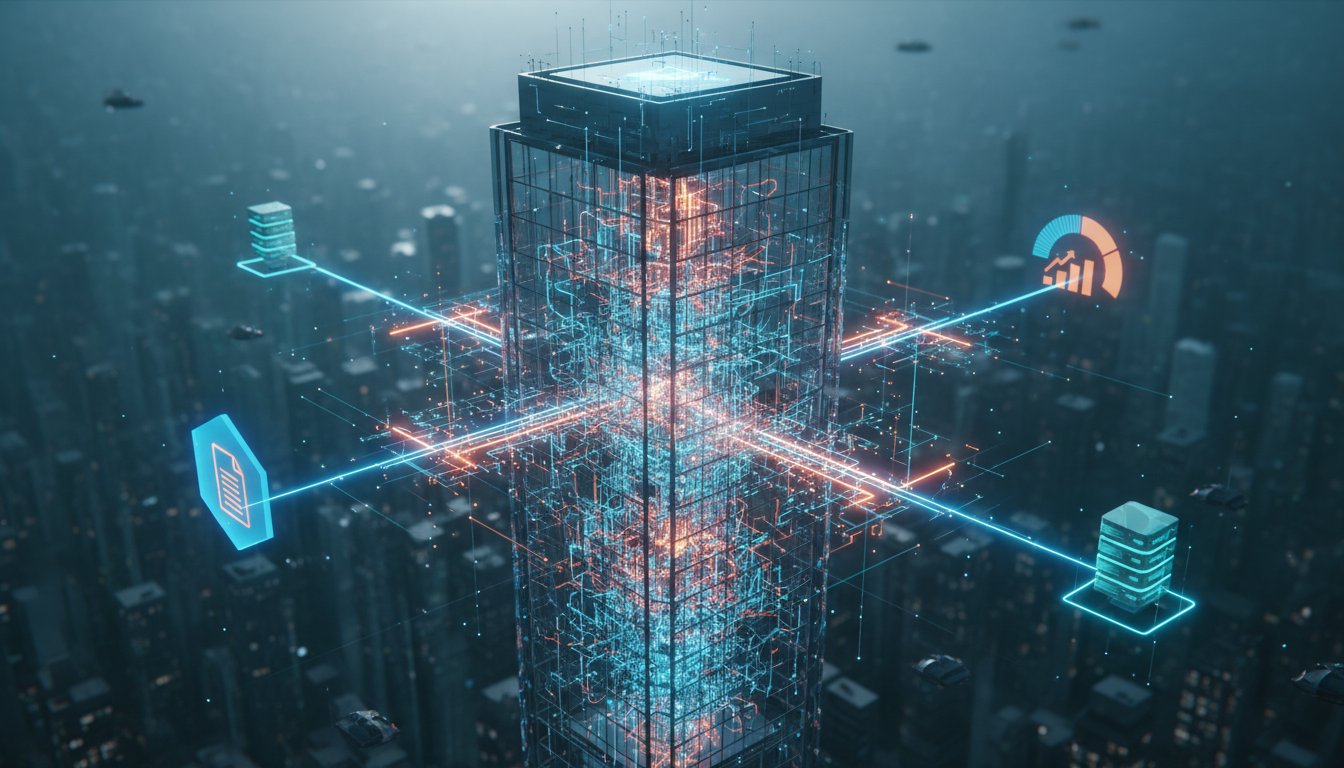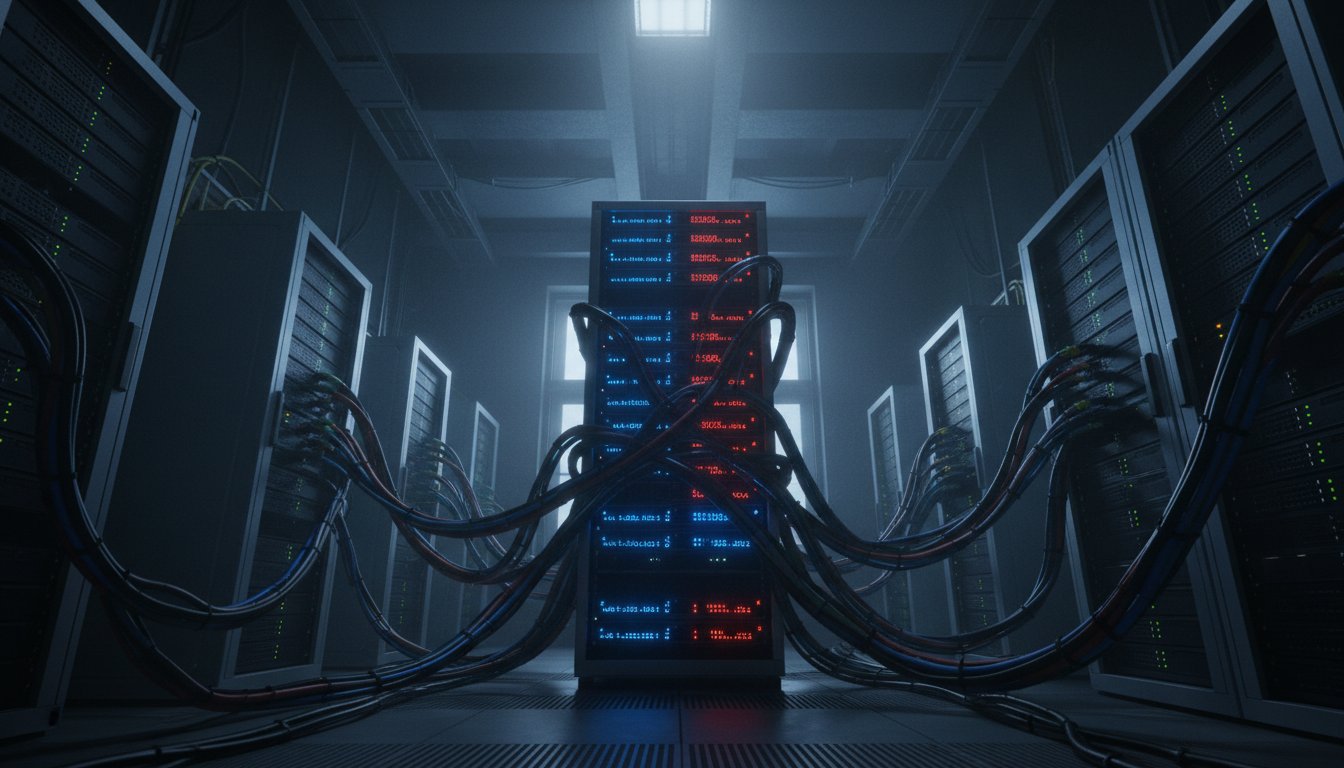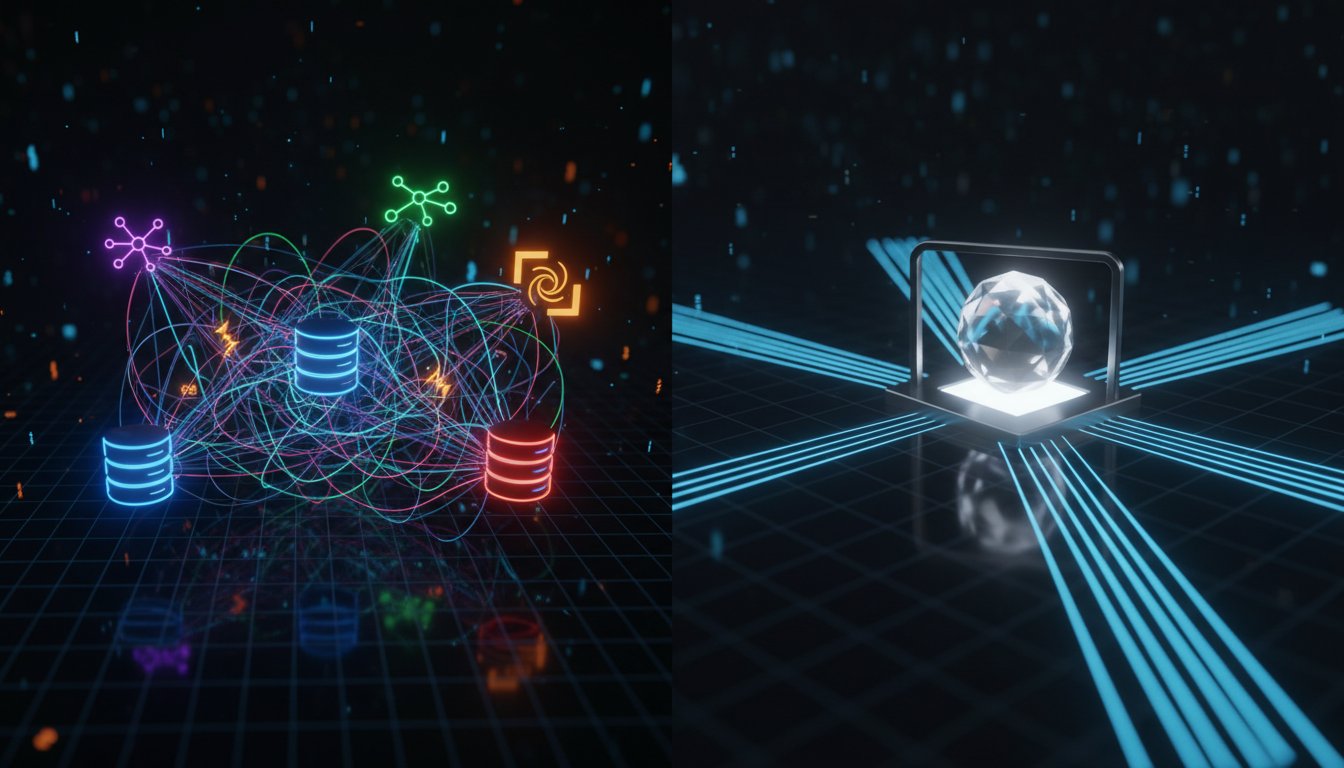

Picture this: Your RAG system is working. Sort of. Your retrieval pipeline pulls relevant documents. Your vector database returns embeddings with acceptable precision. Your graph layer traces relationships. Your SQL warehouse stores metadata. Your cache layer speeds up repeat queries. Five different databases, five different query languages, five different consistency models, five different points of failure.
And somewhere between database two and database three, your system loses 40% of its performance to coordination overhead.
This isn’t a hypothetical scenario. This is the architecture running in most enterprise RAG deployments today. On February 19, 2026, SurrealDB threw down a challenge to this entire paradigm with their 3.0 release and a bold claim: your five-database RAG stack can be replaced with one. The announcement, backed by $23 million in fresh funding, doesn’t just propose a simpler architecture—it exposes a fundamental flaw in how we’ve been building RAG infrastructure.
The question isn’t whether database consolidation is possible. The question is: how much are you losing to the complexity you’ve already built?
The Hidden Tax of Multi-Database RAG Architectures
When you architect a production RAG system today, the conventional wisdom looks something like this:
- Vector database for semantic search (Pinecone, Weaviate, Qdrant)
- Graph database for relationship traversal (Neo4j, Amazon Neptune)
- SQL database for structured metadata (PostgreSQL, MySQL)
- Document store for raw content (MongoDB, Elasticsearch)
- Cache layer for performance (Redis, Memcached)
Each database solves a specific problem brilliantly. Vector databases excel at similarity search. Graph databases trace connections with elegance. SQL databases handle transactions with precision. On paper, this specialization makes sense. In production, it creates a coordination nightmare.
Consider what happens when a single RAG query executes:
- Your application receives a user query
- The query gets vectorized and sent to your vector database
- Retrieved document IDs are used to fetch metadata from SQL
- Relationship context is pulled from your graph database
- Full documents are retrieved from your document store
- Results are cached in Redis for subsequent queries
- Everything gets synchronized, deduplicated, and ranked
Each step adds latency. Each database maintains its own connection pool. Each system has different consistency guarantees. When your vector database returns results in 50ms but your graph traversal takes 200ms, your total query time isn’t additive—it’s multiplicative when you factor in network overhead, serialization, and coordination logic.
SurrealDB’s internal benchmarks claim up to 22x faster graph queries and 8x faster vector search compared to multi-database approaches. Whether those exact numbers hold in your specific use case is less important than the underlying insight: the glue code between your databases is often slower than the databases themselves.
The Synchronization Blindspot: When Your Databases Disagree
Here’s the scenario that keeps enterprise architects awake: Your vector database has been updated with new embeddings. Your document store reflects the latest content. But your graph database is still processing relationship updates from 15 minutes ago. A user query arrives. Which version of truth does your RAG system return?
Multi-database architectures introduce synchronization challenges that don’t exist in single-database systems:
Eventual consistency conflicts: Your vector index might point to documents that your SQL database hasn’t indexed yet. Your cache might serve stale results while your primary databases have updated.
Transaction boundaries: You can’t wrap operations across five different databases in a single ACID transaction. When a document update needs to propagate to vectors, metadata, graphs, and cache simultaneously, you’re building distributed transaction logic—one of the hardest problems in computer science.
Schema drift: Each database evolves independently. Your vector database schema changes don’t automatically propagate to your SQL metadata schema. Over time, your five databases develop subtle inconsistencies that compound into accuracy problems.
The SurrealDB 3.0 approach—consolidating vector, graph, document, and SQL operations into a single ACID-compliant system—isn’t just about performance. It’s about eliminating an entire class of consistency bugs that multi-database architectures can’t solve without heroic engineering effort.
In a unified database model, when you update a document, the vector embedding, graph relationships, and metadata all update within the same transaction boundary. No synchronization lag. No consistency conflicts. No distributed transaction headaches.
The Developer Experience Penalty
Let’s talk about the code you’re writing to hold this together.
In a typical five-database RAG implementation, your codebase includes:
- Five different client libraries (each with different connection patterns, retry logic, and error handling)
- Custom synchronization logic to keep databases aligned
- Monitoring and alerting for five different systems
- Five different backup and recovery procedures
- Data migration scripts when any database needs schema updates
- Query optimization across five different query languages
Your “glue code”—the application logic that coordinates between databases—often exceeds the size of your actual business logic. Developers spend more time managing database orchestration than building RAG features.
SurrealDB’s pitch centers on eliminating this glue code by allowing vector, graph, and SQL retrievals in a single query. Instead of:
# Query vector DB
vector_results = vector_db.search(embedding, top_k=10)
doc_ids = [r.id for r in vector_results]

# Query graph DB for relationships
relationships = graph_db.query(
    "MATCH (d:Document)-[r]-(related) WHERE d.id IN $ids",
    ids=doc_ids
)

# Query SQL for metadata
metadata = sql_db.execute(
    "SELECT * FROM documents WHERE id IN (%s)",
    doc_ids
)

# Merge and synchronize results
results = merge_results(vector_results, relationships, metadata)
You write:
SELECT *,
  vector::similarity::cosine(embedding, $query_vector) AS score,
  <-authored<-person AS authors,
  ->cites->document AS citations
FROM documents
WHERE embedding <|2|> $query_vector
ORDER BY score DESC
LIMIT 10;
One query. One round trip. One consistency model. One system to monitor, backup, and scale.
The developer experience improvement isn’t just convenience—it’s reduced surface area for bugs. Every additional database is another place where queries can fail, connections can timeout, and data can drift out of sync.
The Cost Equation Nobody Calculates
When you evaluate RAG infrastructure costs, you probably calculate:
- Database hosting fees
- API request costs for managed services
- Storage and egress charges
- Compute for embedding generation
But do you calculate the hidden costs?
Engineering time: How many developer hours go into maintaining five database integrations versus one? If your team spends 30% of their time on database coordination logic instead of RAG features, that’s not technical work—that’s technical debt.
Operational overhead: Each database requires monitoring, alerting, backup procedures, security patching, and performance tuning. Five databases don’t require 5x the operational work—they require closer to 10x because of the coordination complexity.
Performance costs: When synchronization lag causes your RAG system to return stale or inconsistent results, what’s the business cost? If database coordination adds 200ms to every query, how does that affect user experience?
Vendor lock-in multiplication: With five databases, you have five different vendor relationships, five different pricing models, five different migration risks. Switching from one vector database to another is already complex. Switching while maintaining synchronization with four other databases is exponentially harder.
The SurrealDB 3.0 consolidation narrative isn’t just about technical elegance. It’s about total cost of ownership. A single database with unified vector, graph, document, and SQL capabilities reduces licensing costs, operational complexity, and engineering overhead simultaneously.
Of course, there’s a counterargument: specialized databases exist because general-purpose databases historically couldn’t match their performance. A dedicated vector database optimized for nothing but similarity search should outperform a multi-model database. In theory.
In practice, the question is whether that performance advantage survives the coordination overhead. If your vector database is 20% faster than SurrealDB’s vector implementation, but the multi-database architecture adds 300% latency from coordination logic, you’ve optimized the wrong layer.
The Infrastructure Consolidation Thesis
The broader trend here extends beyond SurrealDB. We’re seeing consolidation across the database landscape:
- PostgreSQL with pgvector: Adding vector capabilities to an existing SQL database
- MongoDB with vector search: Document stores adding semantic search
- SingleStore with vector functions: Distributed SQL adding vector operations
- ClickHouse with vector indexes: Analytics databases adding similarity search
The pattern is consistent: general-purpose databases are absorbing specialized capabilities rather than specialized databases becoming general-purpose.
This mirrors what happened in the previous database generation. In the early 2010s, the conventional wisdom was that you needed specialized databases: one for caching (Redis), one for search (Elasticsearch), one for analytics (Hadoop), one for transactions (PostgreSQL). Over time, databases got better at handling multiple workloads, and the operational complexity of managing five databases started outweighing the performance benefits of specialization.
RAG infrastructure is following the same arc. The five-database stack made sense when no single database could handle vector, graph, document, and SQL workloads competently. As databases like SurrealDB, PostgreSQL, and MongoDB add multi-model capabilities, the consolidation thesis strengthens.
The question for enterprise teams isn’t whether consolidation will happen—it’s whether you’ll consolidate proactively or wait until the complexity of your current architecture forces your hand.
When Multi-Database Architectures Still Make Sense
Despite the consolidation trend, there are legitimate scenarios where multi-database RAG architectures remain the right choice:
Extreme scale requirements: If you’re processing billions of vectors with sub-10ms latency requirements, specialized vector databases with custom hardware acceleration might be non-negotiable.
Existing infrastructure investment: If you’ve already built a mature five-database stack with robust synchronization, monitoring, and operational processes, migrating to a consolidated architecture carries significant risk and cost.
Best-of-breed performance needs: In some domains, the performance difference between specialized and general-purpose databases is large enough to justify the coordination overhead.
Regulatory data isolation: Some compliance requirements mandate physical separation of certain data types, making consolidation impractical.
The point isn’t that every RAG system should immediately migrate to a single-database architecture. The point is that the default assumption should shift. Instead of starting with “Which five databases do I need?”, the starting question should be: “Can a single multi-model database handle my requirements, and if not, what specific constraint forces me to add complexity?”
The Architecture Decision Framework
If you’re evaluating whether to consolidate your RAG database stack, consider these questions:
Performance: Can a multi-model database meet your latency and throughput requirements? Run benchmarks with your actual data and query patterns, not synthetic tests.
Consistency requirements: How critical is strong consistency across vectors, graphs, and metadata? If eventual consistency is acceptable, multi-database architectures are more viable. If you need ACID guarantees across all data types, consolidation becomes compelling.
Team expertise: Does your team have deep expertise in managing multiple specialized databases? Or would they be more productive with a single, well-understood system?
Scale trajectory: Are you at 10 million vectors or 10 billion? Consolidation makes more sense at smaller scales where specialized database advantages are less pronounced.
Operational maturity: Do you have robust DevOps processes for managing multi-database deployments? Or is database operations a bottleneck for your team?
There’s no universal answer. But the SurrealDB 3.0 announcement—and the broader consolidation trend—signals that the industry is betting on simplification over specialization for a growing segment of RAG deployments.
What This Means for Your RAG Infrastructure Roadmap
If you’re building a new RAG system in 2026, the SurrealDB announcement should influence your architecture decisions:
Start simple: Begin with a multi-model database that can handle vectors, graphs, and documents. Only add specialized databases when you hit specific, measurable limitations.
Measure coordination overhead: If you’re already running a multi-database stack, instrument your glue code. How much latency comes from database queries versus coordination logic? If coordination overhead exceeds 30% of total query time, consolidation becomes attractive.
Plan for consolidation: Even if you need specialized databases today, architect your system so that consolidation is possible later. Avoid tight coupling to vendor-specific features. Keep your data models portable.
Evaluate total cost: When comparing database options, factor in engineering time, operational overhead, and complexity costs—not just licensing and hosting fees.
The five-database RAG stack isn’t wrong. It solved real problems when multi-model databases couldn’t handle production workloads. But technology evolves. The architecture that was necessary in 2023 might be unnecessary complexity in 2026.
The SurrealDB 3.0 launch isn’t just a product announcement. It’s a challenge to the assumption that RAG infrastructure must be complex. Whether SurrealDB specifically becomes the consolidation platform or whether other multi-model databases fill that role, the direction is clear: the industry is moving toward simplification.
The question is whether your architecture will move with it, or whether you’ll keep paying the hidden tax of five-database complexity until the cost becomes impossible to ignore. The engine room of your RAG system doesn’t need five engines. It might just need one engine that actually works.
Is your RAG infrastructure more complex than it needs to be? Take a hard look at your database coordination overhead. If you’re spending more time synchronizing databases than building RAG features, it might be time to challenge the multi-database assumption. The consolidation wave is here—and it’s backed by $23 million in funding and measurable performance improvements. The real question isn’t whether to simplify. It’s how much complexity is costing you while you wait.