
On March 12, 2026, the enterprise RAG scene shifted. Not with another incremental improvement in retrieval accuracy. Not with another promise of “zero hallucinations.” But with a $50 million Series B round that declared war on architectural rigidity itself.
Qdrant, the open-source vector search engine, secured funding from AVP, Bosch Ventures, Unusual Ventures, Spark Capital, and 42CAP with a singular mission: define composable vector search as core infrastructure for production AI. The timing isn’t coincidental. It arrives precisely when enterprise RAG builders are discovering that their biggest bottleneck isn’t model performance. It’s the inflexible architecture holding everything together.
The message is clear: the future of enterprise RAG isn’t about building better retrieval systems. It’s about building systems that can evolve without requiring complete architectural overhauls every time your requirements change.
The Hidden Cost of Architectural Rigidity
Here’s what the funding announcement doesn’t say but every enterprise RAG builder knows: traditional vector databases lock you into architectural decisions you made six months ago. You chose a retrieval strategy. You optimized for specific query patterns. You built your entire pipeline around a single approach to similarity search.
Then your business requirements changed. Suddenly you need to combine dense vectors with sparse retrieval. Or integrate metadata filtering at query time. Or support multiple embedding models simultaneously. With rigid architectures, each change means rethinking your entire system.
The cost isn’t just technical debt. It’s the 72% failure rate for RAG systems in their first year. It’s the 80% of enterprise RAG projects that collapse before reaching production. These aren’t failures of technology. They’re failures of inflexible architecture meeting dynamic business reality.
Composable vector search addresses this fundamental mismatch. Instead of committing to a single retrieval strategy at build time, composable architectures let you combine capabilities at query time. Dense vectors when you need semantic similarity. Sparse vectors when you need keyword precision. Metadata filters when you need to scope results to specific domains. All within the same query, without rebuilding your entire system.
What Makes Composability Different From “Flexible Architecture”
Every vector database vendor claims flexibility. Qdrant’s $50 million bet isn’t on marketing language. It’s on a fundamentally different architectural pattern.
Traditional vector databases optimize for a specific use case. You configure your system for either speed or accuracy, for either dense or sparse vectors, for either simple similarity search or complex hybrid queries. These aren’t flexible systems with multiple modes. They’re rigid systems with configuration options.
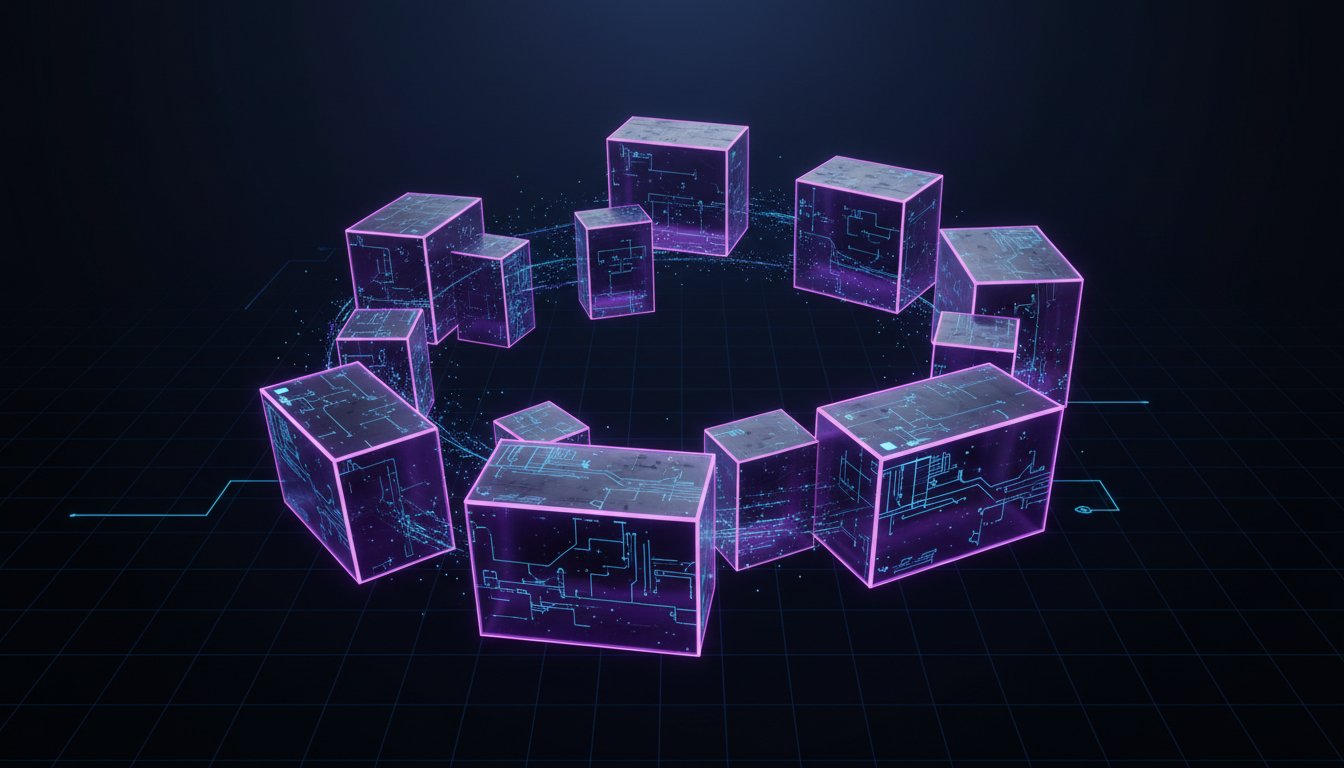
Composable vector search inverts this model. Instead of configuring your system to handle anticipated use cases, you build a system that composes capabilities on demand. The architecture itself becomes modular, letting teams combine retrieval strategies, filtering mechanisms, and ranking approaches as query requirements evolve.
Consider how Databricks’ Instructed Retriever, announced on January 6, 2026, demonstrates this shift. Rather than forcing teams to choose between vector similarity and metadata filtering, it translates user intents into search plans that dynamically combine both. The result: 35-50% improvement in retrieval recall and up to 70% higher end-to-end answer accuracy compared to traditional RAG.
That performance gap isn’t about better algorithms. It’s about architecture that adapts to query complexity instead of forcing every query through the same rigid pipeline.
The Technical Implications for Enterprise RAG Builders
Composable architecture solves three critical problems that plague rigid RAG systems.
The Multi-Strategy Retrieval Problem: Enterprise queries rarely fit neatly into “semantic search” or “keyword search” categories. A financial analyst asking “What were Apple’s Q4 earnings compared to analyst expectations?” needs semantic understanding of financial concepts, keyword matching on “Q4” and “Apple,” and metadata filtering to scope results to recent earnings reports. Rigid architectures force you to pick a primary strategy and supplement it awkwardly. Composable systems let you combine all three natively.
The Evolution Problem: Your RAG system that works brilliantly for customer support queries will fail when you extend it to technical documentation search. Traditional architectures require rebuilding core components to accommodate new retrieval patterns. Composable architectures let you add new capabilities without touching existing functionality. Think of it like adding a new room to your house instead of rebuilding the foundation.
The Observability Gap: When retrieval fails in a rigid system, you’re debugging a black box. Did the embedding fail? Did the similarity search miss relevant documents? Did your metadata filter eliminate the right results? Composable architectures make each component explicit and observable, turning debugging from guesswork into systematic diagnosis.
The architectural pattern looks like this: instead of a monolithic retrieval pipeline that does everything, you build discrete components that each handle one aspect of retrieval, covering vector similarity, sparse matching, metadata filtering, reranking, and context expansion. At query time, you compose these components based on the specific requirements of each query.
This isn’t theoretical architecture. It’s how enterprises are solving the cost explosion problem that kills RAG projects. When every query runs through the same expensive pipeline regardless of complexity, costs scale linearly with usage. When you can compose simpler pipelines for simple queries and reserve expensive components for complex ones, costs scale with value delivered.
Why Vector Database Vendors Are Racing Toward Composability
Qdrant’s $50 million round isn’t happening in isolation. Look at the broader funding picture in early 2026.
Vectara secured $25 million in Series A for RAG advancements focused on “trustworthy and verifiable” generative AI. Progress Software acquired Nuclia, a leader in agentic RAG capabilities. The vector database market is projected to reach $40 billion by 2035, up from $1.2 billion in 2023, a 38.4% compound annual growth rate.
But here’s what makes Qdrant’s positioning unique: while competitors focus on improving retrieval accuracy or adding agentic capabilities on top of existing architectures, Qdrant is attacking the architectural foundation itself. The bet is that composability becomes the prerequisite for everything else, that you can’t build reliable agentic systems or achieve trustworthy retrieval on top of rigid architectures.
The technical evidence supports this. Research from Databricks shows that instructed retrieval, which requires dynamically composing search strategies, outperforms traditional RAG by 70% on answer accuracy. That’s not a marginal improvement you achieve through better embeddings or more sophisticated reranking. That’s a fundamental leap enabled by architectural flexibility.
The market is responding. Vector database growth is up 377% year-over-year according to Databricks data. But not all growth is equal. The vendors winning enterprise contracts aren’t the ones with the fastest similarity search or the largest model support. They’re the ones whose architecture can evolve with enterprise requirements.
The Hidden Trade-Offs Nobody Discusses
Composable architecture isn’t free. While vendor marketing emphasizes flexibility and performance, enterprise RAG builders face real trade-offs that determine whether composability solves problems or creates new ones.
Complexity at the Wrong Layer: Rigid architectures push complexity into configuration. You spend weeks tuning your system before deployment. Composable architectures push complexity into orchestration. You spend ongoing effort deciding how to combine components for each use case. For teams without dedicated retrieval engineers, this can make systems harder to operate, not easier.
Performance Overhead: Composing multiple retrieval strategies at query time introduces latency that monolithic pipelines avoid. A rigid system that always runs dense vector search will be faster than a composable system that decides which strategies to apply, executes multiple retrieval paths, and merges results. The question isn’t whether composability adds overhead. It does. The real question is whether the flexibility justifies the cost.
The Integration Tax: Composable systems require more sophisticated integration with your broader RAG pipeline. Your orchestration layer needs to understand what components to compose for different query types. Your monitoring needs to track performance across multiple retrieval strategies. Your cost management needs to attribute expenses to specific capabilities. This integration work is invisible in vendor demos but dominates implementation timelines.
The enterprises succeeding with composable architectures aren’t the ones that adopt it universally. They’re the ones that recognize when rigidity is acceptable and when flexibility is essential. Simple customer support chatbots that handle predictable queries? Rigid architectures work fine and cost less. Complex enterprise search spanning multiple data types with evolving requirements? Composability becomes worth the investment.
What This Means for Your RAG Roadmap
Qdrant’s $50 million funding and the broader shift toward composable vector search force a strategic question for every enterprise RAG builder: Is your architecture designed for what you’re building today, or for how your requirements will evolve?
If your RAG system has stable, well-defined requirements, you know exactly what data you’re searching, what queries users will ask, and what retrieval strategies work best, then rigid architecture remains the optimal choice. Lower complexity, better performance, easier operations. The risk is that your requirements stay stable, which in enterprise environments rarely happens.
If your RAG system faces evolving requirements, new data sources, expanding use cases, unclear optimal retrieval strategies, composable architecture becomes insurance against architectural dead ends. The cost is higher complexity and some performance overhead. The benefit is avoiding the architectural rewrites that kill 72% of RAG projects.
The middle path looks like this: build on composable infrastructure like Qdrant, but implement simple, focused retrieval pipelines initially. As requirements evolve, you have the architectural foundation to add complexity without rebuilding. You’re paying for optionality you might not use, but you’re avoiding the risk of architectural lock-in.
Here are three specific signals that composability matters for your use case:
-
You’re combining multiple data types: If your RAG system searches across structured databases, unstructured documents, and code repositories simultaneously, rigid architectures force uncomfortable compromises. Composable systems let you apply appropriate retrieval strategies to each data type within a single query.
-
Your query patterns are evolving: If you’re still discovering what users actually need from your RAG system, where query patterns differ from your initial assumptions and users ask questions you didn’t anticipate, composable architecture gives you room to experiment without committing to a single approach.
-
You’re scaling from prototype to production: If your RAG system started as a proof-of-concept and is now handling real enterprise workloads, composability becomes the difference between graceful scaling and painful rewrites. Production requirements almost always reveal limitations in prototype architectures.
The Composability Revolution Beyond Vector Search
Qdrant’s funding signals something larger than improvements in vector databases. It represents the broader enterprise AI trend toward composable infrastructure, systems designed for evolution rather than point-in-time optimization.
This pattern repeats across the AI stack. Databricks’ Instructed Retriever composes search strategies. Agentic RAG frameworks compose autonomous agents with retrieval capabilities. Multimodal RAG systems compose different embedding models for text, images, and structured data. The common thread is rejecting monolithic architectures in favor of modular components that combine at runtime.
This shift mirrors broader infrastructure trends. The 2026 move toward composable ERP systems, where enterprises assemble business capabilities from multiple vendors instead of committing to single monolithic platforms, reflects the same underlying principle. In rapidly evolving fields, architectural flexibility matters more than point-in-time optimization.
For enterprise RAG builders, this means architectural decisions increasingly determine success or failure. The vector database you choose, the retrieval patterns you implement, the orchestration layer you build, these aren’t just technical choices. They’re bets on whether your requirements will stay stable or evolve.
Qdrant’s $50 million bet is that evolution wins. That the enterprises succeeding with RAG in 2026 and beyond won’t be the ones who optimized perfectly for today’s requirements. They’ll be the ones whose architecture can adapt to tomorrow’s requirements without complete rewrites.
The question for your RAG system isn’t whether Qdrant’s specific implementation of composable vector search is right for your use case. It’s whether your current architecture can evolve with your business, or whether you’re building on a foundation that will need replacing the moment your requirements change.
That architectural decision, composability versus rigidity, evolution versus optimization, is what $50 million in venture funding just declared the defining question for enterprise RAG systems in 2026. The enterprises that answer it correctly won’t just build better RAG systems. They’ll build systems that can keep getting better as the technology and their requirements evolve together.
Composability isn’t about abandoning optimization for flexibility. It’s about recognizing that in enterprise AI, the ability to evolve is the optimization that matters most. Your RAG system will change. The only question is whether your architecture can change with it, or whether change means starting over. If you’re evaluating your current retrieval infrastructure, that’s the question worth sitting with before your next architectural decision.