
Picture this: your enterprise AI system confidently answers a complex query about your latest product line, pulling accurate, up-to-date information from your internal knowledge base in real time, without hallucinating a single detail. That’s not a distant dream anymore. Retrieval Augmented Generation, better known as RAG, is making it a reality for businesses right now, and 2026 is shaping up to be the year it goes fully mainstream.
For years, enterprise AI adoption has been held back by a stubborn problem: large language models are impressive, but they’re frozen in time. They know what they were trained on, and nothing more. Feed them a question about your Q3 inventory figures or a newly signed vendor contract, and they’ll either guess or admit they don’t know. Neither answer is good enough when real decisions are on the line.
RAG changes that equation. By connecting AI models to live, external data sources at the moment of inference, it gives them the ability to retrieve relevant information before generating a response. The result is an AI that’s both fluent and factually grounded. It’s not just smarter, it’s actually useful in a business context.
This post breaks down what’s happening with RAG in enterprise AI heading into 2026, where the technology is improving, how companies are putting it to work, and what it means for teams evaluating AI solutions right now.
Why RAG Has Become a Priority for Enterprise AI Teams
The enterprise AI conversation shifted significantly over the past two years. Early enthusiasm around generative AI gave way to harder questions: How do we keep outputs accurate? How do we prevent sensitive data from leaking into model training? How do we make AI useful for domain-specific work?
RAG answers most of those questions in one move.
The Core Problem It Solves
Standalone language models are trained on static datasets. By the time they’re deployed, that data is already months or years old. For consumer applications, that’s a minor inconvenience. For enterprise use cases, it’s a serious liability.
A legal team needs current case law. A sales team needs accurate product specs. A support team needs the latest troubleshooting documentation. None of that lives inside a pre-trained model, and fine-tuning a model every time something changes isn’t practical or cost-effective.
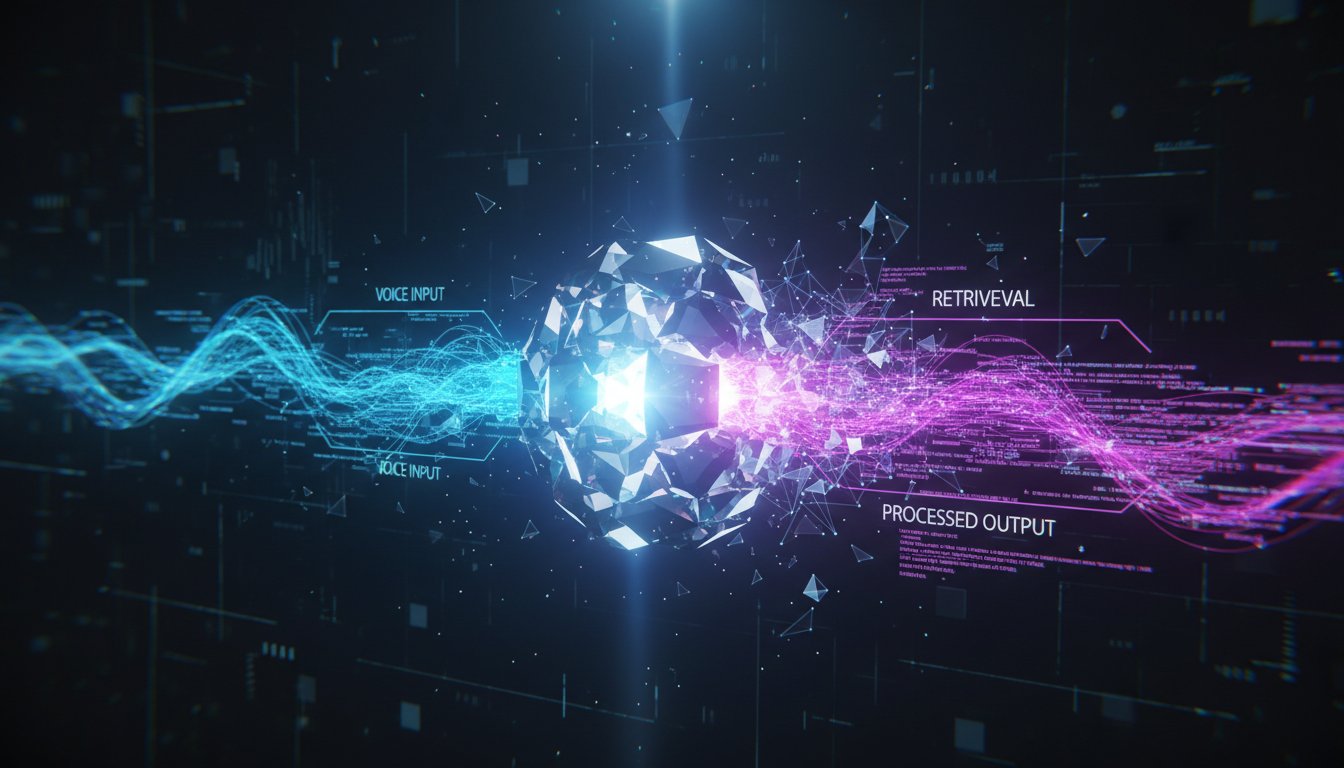
RAG sidesteps the problem entirely. Instead of baking knowledge into the model, it retrieves the right information at query time and hands it to the model as context. The model then generates a response grounded in that retrieved data. Fresh, relevant, and far less likely to fabricate.
Why 2026 Is a Turning Point
Early RAG implementations were functional but clunky. Retrieval quality was inconsistent, latency was noticeable, and integrating RAG pipelines into existing enterprise systems required significant engineering effort. Those friction points are disappearing fast.
In 2026, improvements across vector databases, embedding models, and retrieval algorithms are making RAG pipelines faster, more accurate, and easier to deploy. Enterprise AI platforms are shipping RAG as a built-in capability rather than a custom add-on. That shift is bringing the technology within reach for organizations that don’t have large AI engineering teams.
Key Advances Driving RAG Forward in 2026
The RAG architecture that exists today looks meaningfully different from what was being discussed even 18 months ago. Several specific improvements are worth paying attention to.
Better Retrieval, Better Answers
The quality of a RAG system’s output depends heavily on what it retrieves. Early systems relied on basic semantic similarity search, which worked reasonably well but struggled with nuanced queries or documents that required multi-step reasoning.
Newer retrieval approaches combine dense vector search with sparse keyword methods, a technique often called hybrid retrieval. This combination handles a wider range of query types more reliably. Some systems are also adding re-ranking layers that score retrieved chunks for relevance before passing them to the model, cutting down on noise in the context window.
The practical effect is noticeable. Responses are more accurate, more specific, and less likely to drift off-topic.
Smarter Chunking and Indexing
How documents get broken up and stored matters more than most people initially realized. Chunk too large, and the model gets overwhelmed with irrelevant context. Chunk too small, and you lose the surrounding information that gives a passage meaning.
In 2026, more sophisticated chunking strategies are becoming standard. Hierarchical indexing, where documents are stored at multiple levels of granularity, lets retrieval systems pull the right amount of context for a given query. Metadata tagging is also improving, making it easier to filter results by document type, date, department, or other attributes before retrieval even begins.
Reduced Latency at Scale
One of the early knocks on RAG was speed. Adding a retrieval step to every query introduced latency that made real-time applications feel sluggish. That’s changing.
Advances in vector database performance, combined with smarter caching strategies and more efficient embedding models, have brought RAG response times down significantly. For most enterprise use cases, the latency is now comparable to a standard API call, which removes one of the last practical objections to deploying RAG in customer-facing or time-sensitive applications.
How Enterprises Are Actually Using RAG Right Now
The technology is interesting, but what matters is how it’s being applied. Across industries, a few use cases are emerging as the clearest wins.
Internal Knowledge Management
This is where RAG adoption is most widespread. Enterprises are sitting on enormous volumes of internal documentation, from HR policies and compliance guidelines to technical manuals and project histories. Most of it is hard to search and harder to use.
RAG-powered internal assistants let employees ask natural language questions and get accurate answers pulled directly from that documentation. No more digging through SharePoint folders or waiting for a colleague to respond. The AI retrieves the relevant policy, procedure, or specification and surfaces it in a readable format.
Companies deploying these systems report meaningful reductions in time spent on information retrieval tasks, and a noticeable drop in errors caused by employees working from outdated documents.
Customer Support and Service
Support teams are another natural fit. RAG allows AI assistants to pull from product documentation, known issue databases, and customer history to generate responses that are specific, accurate, and actually helpful.
The difference from a standard chatbot is significant. A traditional bot matches keywords to scripted responses. A RAG-powered assistant understands the question, retrieves the most relevant information from a live knowledge base, and generates a response tailored to that specific query. Escalation rates drop. Customer satisfaction scores improve.
Compliance and Legal Research
In regulated industries, accuracy isn’t optional. Legal and compliance teams are using RAG to query large repositories of regulatory documents, case files, and internal policies. The ability to retrieve specific, citable passages rather than relying on a model’s general knowledge makes RAG a much safer tool in these contexts.
Some organizations are pairing RAG with citation tracking, so every AI-generated response includes a reference to the source document. That audit trail matters enormously in environments where decisions need to be defensible.
What Enterprise Teams Should Watch in 2026
RAG is maturing quickly, but it’s not a plug-and-play solution. Teams evaluating or expanding their RAG implementations should keep a few things in mind.
Data Quality Is Still the Bottleneck
RAG is only as good as the data it retrieves from. If your internal knowledge base is full of outdated, inconsistent, or poorly structured documents, a RAG system will faithfully retrieve that bad information and present it with confidence. Garbage in, garbage out, just faster.
Before investing in RAG infrastructure, it’s worth auditing the quality and organization of your underlying data. The companies getting the most out of RAG in 2026 are the ones that treated data hygiene as a prerequisite, not an afterthought.
Security and Access Control Matter
RAG systems retrieve information dynamically, which means access control has to be built into the retrieval layer, not just the application layer. An employee asking a question shouldn’t be able to surface documents they don’t have permission to view, even indirectly through an AI response.
This is an area where enterprise RAG platforms are improving, but it requires deliberate configuration. Teams should verify that their RAG implementation respects existing permission structures before rolling it out broadly.
Evaluation Is Harder Than It Looks
Measuring whether a RAG system is actually performing well is genuinely tricky. Standard accuracy metrics don’t capture retrieval quality, relevance, or the subtle ways a response can be technically correct but practically misleading.
In 2026, better evaluation frameworks for RAG are emerging, including tools that assess retrieval precision, answer faithfulness, and contextual relevance separately. Teams building or buying RAG solutions should push for clear evaluation criteria from the start, not after deployment.
The Bigger Picture: RAG as Enterprise AI Infrastructure
It’s tempting to think of RAG as a feature, a useful add-on that makes AI outputs a bit more reliable. But that framing undersells what’s happening.
For enterprises, RAG is becoming foundational infrastructure. It’s the mechanism that connects general-purpose AI capabilities to the specific, proprietary knowledge that makes a business run. Without it, enterprise AI is a powerful tool with no access to the information that actually matters. With it, AI becomes a genuine extension of institutional knowledge.
The organizations moving fastest in 2026 aren’t just experimenting with RAG. They’re treating it as a core component of their AI strategy, investing in the data pipelines, retrieval infrastructure, and evaluation processes that make it work reliably at scale.
Where This Leaves You
RAG in enterprise AI isn’t a future trend to monitor from a distance. It’s a present-tense capability that’s already reshaping how leading organizations handle knowledge management, customer support, compliance, and decision-making.
The technology is more accessible than it’s ever been. The use cases are proven. The remaining challenges, data quality, access control, evaluation, are solvable with the right approach.
If your team is evaluating AI solutions or looking to get more out of existing investments, RAG deserves a serious look. The gap between organizations that have figured this out and those still running on static, disconnected AI tools is widening. 2026 is a good time to close it.
Want to see how RAG fits into your specific enterprise context? Explore our resources on enterprise AI implementation or connect with our team to talk through your use case.