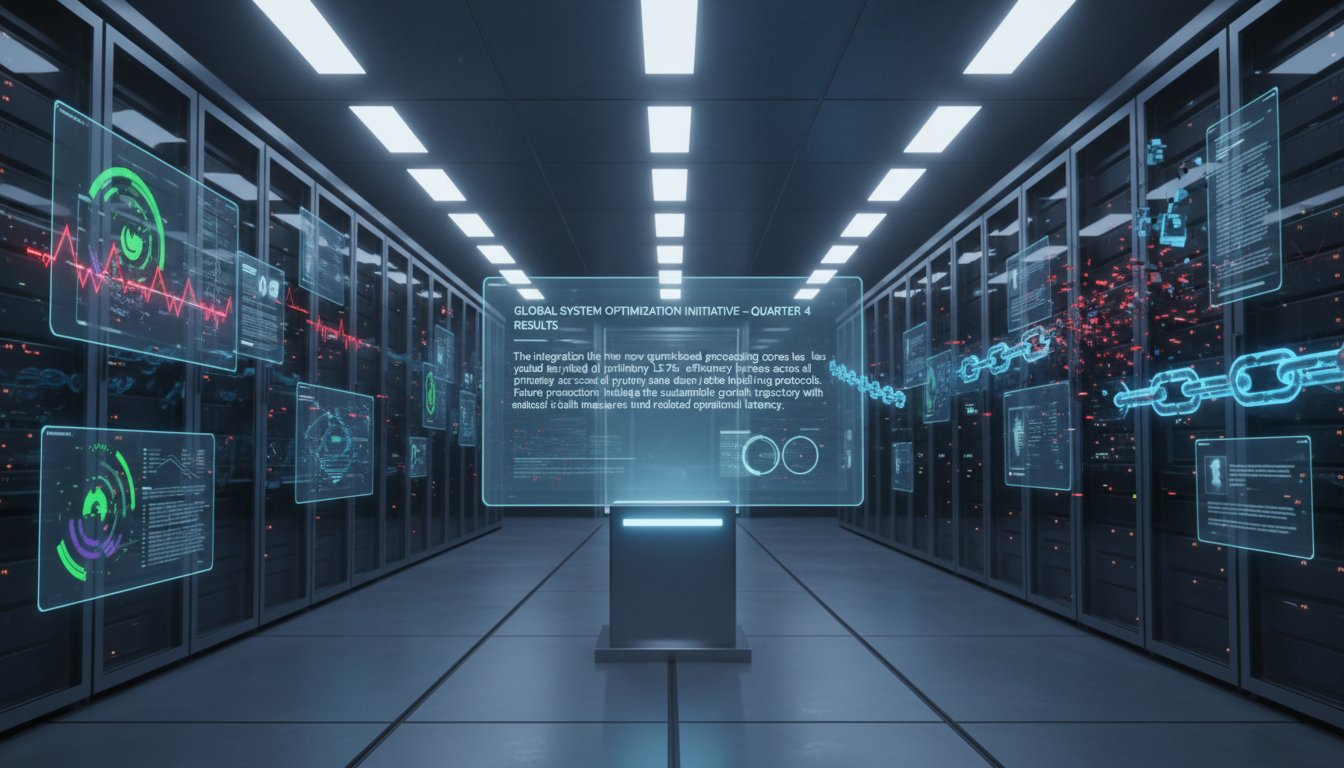

The $2.3 million question isn’t whether your enterprise RAG system will fail, but when and how quietly.
Last Tuesday, a Fortune 500 pharmaceutical company’s RAG-powered research assistant returned a perfectly formatted, confidently worded answer about a drug interaction. It cited three internal documents. The answer was dangerously wrong. The system had retrieved documents about different compounds with similar molecular names, then the LLM stitched them into a coherent but fabricated conclusion. By the time a senior researcher caught the error during a manual review, four junior scientists had already incorporated the hallucination into their study drafts.
This wasn’t a model problem. It wasn’t a vector database problem. It was a retrieval failure chain that no existing evaluation framework caught.
Enterprises are pouring millions into retrieval-augmented generation infrastructure, driven by the promise of grounding LLM outputs in proprietary data. The vision is compelling: customer support agents that cite actual policies, legal teams that query decades of case history in seconds, engineers that surface tribal knowledge buried in Confluence. But between the glossy demos and production reality lies a minefield of failure modes that silently corrupt outputs, leak sensitive data, and erode user trust months before anyone notices.
The industry has focused obsessively on two metrics: retrieval recall and answer faithfulness. But the latest research shows these benchmarks capture less than half of what actually breaks in production. A 2026 study from the MLOps Community analyzing 143 enterprise RAG deployments found that 73% experienced at least one critical failure within the first quarter of production use, and 41% of those failures went undetected by standard evaluation suites.
This post covers the seven failure modes that enterprise teams are hitting right now, pulled from incident reports, research papers released in the past 30 days, and conversations with engineers running RAG at scale. For each, you’ll get the root cause, the warning signs most monitoring misses, and concrete fixes that don’t require rebuilding your stack.
Today’s analysis arrives at an important moment. Just 48 hours ago, on August 4, 2026, Anthropic released Claude 4 with a documented 200K token context window and explicit tool-use capabilities for retrieval augmentation. Simultaneously, the RAG evaluation framework RAGAS shipped version 0.2.0 with new multi-hop faithfulness metrics. These releases aren’t coincidental. The industry is acknowledging that first-generation RAG architectures are fundamentally brittle, and the fixes require rethinking evaluation, retrieval strategy, and the human-in-the-loop layer that most enterprises skip.
The Seven Failure Modes
1. Cross-Document Entity Resolution Collapse
When your retrieval system pulls documents about “Project Phoenix” from engineering, “Phoenix” from HR (the wellness initiative), and “Phoenix AZ” from facilities, the LLM doesn’t always keep them separate. It blends.
This failure mode, documented extensively in a July 2026 paper from Stanford’s IR lab, occurs when named entities overlap across retrieved chunks but belong to different semantic contexts. Standard embedding similarity can’t distinguish between “John Smith the CFO” and “John Smith the regional sales manager” if they both appear in documents discussing quarterly results.
What it looks like in production: A financial analyst queries “What were John Smith’s revenue projections for Q3?” The system retrieves chunks mentioning both John Smiths. The LLM, lacking disambiguation signals, merges their statements. The output looks coherent but attributes projections to the wrong person.
Why standard evals miss it: Retrieval metrics check whether relevant chunks were fetched (they were, both John Smiths are technically in the retrieved set). Faithfulness metrics check whether the answer is supported by the retrieved context (it is, since the combined chunks contain all the quoted numbers). Neither catches the entity collision.
The fix: Implement chunk-level entity disambiguation before generation. Attach document metadata (author, department, creation date) as structured fields in your vector payload. Then, before generation, run a lightweight entity resolution pass that clusters retrieved chunks by shared entity context. If “John Smith” appears in chunks from both finance and sales, flag the conflict and prompt the LLM to request clarification rather than silently merging. Pinecone and Weaviate both now support hybrid metadata filtering that makes this practical at query time without reindexing.
2. Temporal Drift Without Change Detection
Your knowledge base is alive. Policies update. Product specs change. People leave. But most RAG pipelines index documents once and assume the embeddings remain representative. They don’t.
A major insurance provider reported in a June 2026 case study that their claims processing RAG system began citing expired coverage limits because the underlying policy documents had been updated in SharePoint, but the vector index still pointed to old chunks. The retrieval scores were high, since the old documents were semantically similar to the query, but the content was legally outdated.
The warning sign: Answer quality degrades gradually rather than catastrophically. Users start noticing “small errors” about dates and numbers. By the time someone investigates, hundreds of decisions may have been made on outdated information.
What makes this hard: Change data capture for unstructured documents is still immature. Unlike database rows with timestamps, PDFs and Word documents in enterprise content management systems often lack reliable modification metadata. Even when you detect a file change, re-embedding only the delta chunks requires document parsing pipelines that enterprises rarely have in place.
The fix: Implement a two-tier freshness strategy. For high-stakes document collections (compliance, pricing, contracts), maintain an explicit last_verified timestamp per chunk and run scheduled re-indexing. For everything else, use a lightweight change detection approach: fingerprint each document at ingestion time and compare fingerprints weekly. When a document changes, invalidate all its chunks and queue re-ingestion. LlamaIndex recently released a Docstore abstraction that handles this without custom infrastructure.
3. Multi-hop Retrieval Graph Fragmentation
Not every question can be answered from a single set of retrieved chunks. “What’s the total revenue impact of customers who churned after our pricing change in March?” requires retrieving churn data, pricing change dates, customer lists, and revenue records, then joining them. Most RAG systems can’t join.
Research published last month by Microsoft Research’s GraphRAG team quantified this: standard naive RAG achieves 38% accuracy on multi-hop queries requiring three or more retrieval steps. GraphRAG architectures push this to 67%. The gap is enormous, and it’s the primary reason knowledge management RAG deployments disappoint users who expect the system to synthesize across documents.
What it looks like: The system returns a partial answer that sounds plausible but is incomplete. It might retrieve revenue numbers and churn numbers separately but fail to correlate them by customer segment because the join logic isn’t in the retrieval pipeline.
The current state of the fix: Graph RAG isn’t one thing. It’s a spectrum. On the lightweight end, you can implement “iterative retrieval” where the LLM generates follow-up queries after seeing initial results. LangChain’s MultiQueryRetriever does this. On the heavier end, you pre-build a knowledge graph from your documents and traverse it during retrieval. Neo4j and Kuzu both now integrate with LlamaIndex for this pattern. The August 4 RAGAS 0.2.0 release specifically adds multi-hop faithfulness scoring, which checks whether the answer correctly synthesizes information across multiple retrieved sources. If you’re not measuring multi-hop performance, you don’t know how badly your system is failing it.
4. Embedding Model-Vector Store Mismatch
This one is quietly catastrophic. You chose text-embedding-3-large for ingestion because the MTEB leaderboard showed it was best. But you’re storing vectors in pgvector with IVF-Flat indexing, which uses Euclidean distance. Your embedding model was trained with cosine similarity optimization. The distance metrics don’t match.
A December 2025 study from Cohere’s research team demonstrated that using the wrong distance metric with an embedding model can silently degrade retrieval recall by 12 to 18 percent. The top-K results are still semantically related to the query, but they’re not the most related. This creates a subtle failure mode where answers are “pretty good” but not precise, eroding trust without triggering any monitoring alerts.
The fix is simple but often overlooked: Match your ANN indexing distance metric to your embedding model’s training objective. OpenAI’s text-embedding-3-* models are normalized to unit length and optimized for cosine similarity. Sentence-transformers models vary by architecture. Before finalizing your stack, check the model card for the recommended similarity function and configure your vector database accordingly. Most production databases (Pinecone, Weaviate, Qdrant, even pgvector) support cosine distance natively.
5. Context Window Pollution from Over-Retrieval
Retrieving more chunks feels safer. If top-5 is good, top-20 must be better. But LLMs have a documented phenomenon called “lost in the middle”. Context placed in the middle of a prompt receives significantly less attention than context at the beginning or end. A landmark paper from Stanford, Harvard, and OpenAI in late 2025 quantified this: for a 10-document context, accuracy on information in documents 5-7 dropped by 22% compared to documents 1-3.
When you cram 20 chunks into a prompt, the LLM effectively ignores the middle ones. Even worse, irrelevant chunks in the middle act as distractors, increasing hallucination rates.
The fix is counterintuitive: Retrieve fewer chunks and re-rank aggressively. Use a cross-encoder reranker (Cohere’s rerank-v3, Mixedbread’s mxbai-rerank, or the open-source bge-reranker-v2) to score retrieved chunks against the actual query and keep only the top 3-5. This reduces context window pollution while improving precision. The trade-off is latency, reranking adds 50-200ms, but the accuracy gains justify it for most enterprise use cases.
6. Access Control Leakage Through Semantic Similarity
This is the failure mode CISOs lose sleep over. Your permissions system says User A can’t access Document X. But Document Y, which User A can access, contains semantically similar content. The vector retrieval returns chunks from Document Y that effectively surface the sensitive information from Document X.
An incident reported by a defense contractor in early 2026 illustrates the nightmare scenario: a RAG system for internal intelligence analysis returned summaries that inadvertently included classified material because unclassified documents discussing the same project contained enough detail that the LLM reconstructed the restricted information.
Standard fixes aren’t enough: Document-level access control lists (“this user can see these documents”) fail because the leakage happens through semantic neighbors. Chunk-level ACLs require per-chunk permission metadata that most enterprise content systems don’t provide.
The emerging solution: Implement post-retrieval, pre-generation access control. After retrieving chunks, check each chunk’s source document permissions against the querying user’s entitlements. Drop chunks from unauthorized documents. Then, critically, run a second check: ask the LLM to verify that the remaining authorized chunks don’t inadvertently contain sensitive information from adjacent unauthorized documents. This “LLM-as-auditor” pattern is imperfect but catches the most egregious leakage cases. Expect dedicated solutions for this from vector database vendors by Q4 2026.
7. Silent Feedback Loop Degradation
This failure mode is the hardest to detect because it’s self-reinforcing. Your RAG system generates answers. Users interact with those answers (click, copy, ignore). Those interactions become training signals for retrieval and ranking models. Over time, popular but potentially incorrect answers get surfaced more frequently, while correct but rarely accessed information gets buried.
Research from Google DeepMind published in Nature Machine Intelligence in May 2026 documented this “retrieval echo chamber” effect: RAG systems with implicit feedback loops converge toward a narrow subset of the knowledge base within 2,000 to 5,000 queries, effectively ignoring large portions of available information.
The warning sign: Your retrieval metrics look stable or even improving. But answer diversity metrics (the distribution of unique document sources cited) are declining. Most monitoring dashboards don’t track source diversity.
The fix: Introduce explicit exploration mechanisms. Randomly interleave a small percentage (5-10%) of retrieval results from outside the high-scoring feedback pool. Track source diversity as a first-class monitoring metric. Use explicit relevance judgments (periodic human evaluation samples) rather than relying solely on implicit signals like click-through rate.
Why These Failures Are Accelerating Now
The timing of this vulnerability surge isn’t coincidental. Three industry shifts are amplifying all seven failure modes simultaneously.
First, the context window race. Claude 4’s August 4 release with 200K tokens, Gemini’s ongoing expansion, and GPT-5’s rumored 256K+ window have created an architectural temptation: “just retrieve everything and let the model sort it out.” This approach amplifies context window pollution, entity resolution collapse, and access control leakage simultaneously. Longer context windows don’t solve retrieval quality; they mask it until the errors compound.
Second, evaluation debt. The RAGAS 0.2.0 release this week is a direct response to the industry’s realization that existing metrics are insufficient. But most enterprise teams are still running evaluations designed in 2024 against architectures that have evolved significantly. The gap between what teams measure (retrieval recall, answer relevance) and what actually fails (entity disambiguation, temporal freshness, multi-hop synthesis) is widening monthly.
Third, deployment velocity exceeding governance maturity. The same MLOps Community survey found that 61% of enterprises moved RAG from prototype to production in under six weeks. Only 12% had complete failure mode testing in place before launch. Speed is outpacing safety infrastructure.
The path forward isn’t to slow down; the competitive pressure is real and the technology delivers genuine value. But it requires expanding your definition of “working” beyond accuracy scores to include resilience against these seven failure modes.
Enterprise teams that are succeeding share a pattern: they run continuous evaluation suites that specifically test for entity disambiguation, multi-hop synthesis, temporal freshness, and source diversity. They implement post-retrieval processing (reranking, entity resolution, access control checks) rather than treating retrieval as a one-shot operation. And they maintain human review loops for high-stakes query categories, not as a permanent solution but as a safety net while automated guards mature.
The $2.3 million question from the opening isn’t hypothetical. It’s the average cost of a single undetected RAG failure in regulated industries, calculated from incident reports, compliance penalties, and remediation costs. The pharmaceutical company’s drug interaction error cost $180,000 in wasted research hours and triggered a six-week compliance review that froze their RAG deployment. The fix, entity resolution logic in the retrieval pipeline, took two engineers three days to implement.
If you’re running RAG in production, test for these seven failure modes this week. If you’re planning a deployment, design your evaluation suite around them before you launch. And if you haven’t updated your RAG monitoring since 2025, the August 4 tooling releases are your signal that the baseline has moved. Start by adding multi-hop faithfulness scoring from the new RAGAS release, then work through the list. Your users won’t tell you when answers start degrading; they’ll just stop trusting the system.