
When a Fortune 500 healthcare provider’s retrieval-augmented chatbot started injecting fake drug dosing data into clinical responses last month, patient safety alarms went off. It wasn’t a model hallucination. An attacker had poisoned the vector database with adversarial passages. The incident triggered an SEC investigation and a quiet scramble across enterprise security teams. The root cause wasn’t a traditional LLM flaw. It was a retrieval pipeline vulnerability that no one was watching until today.
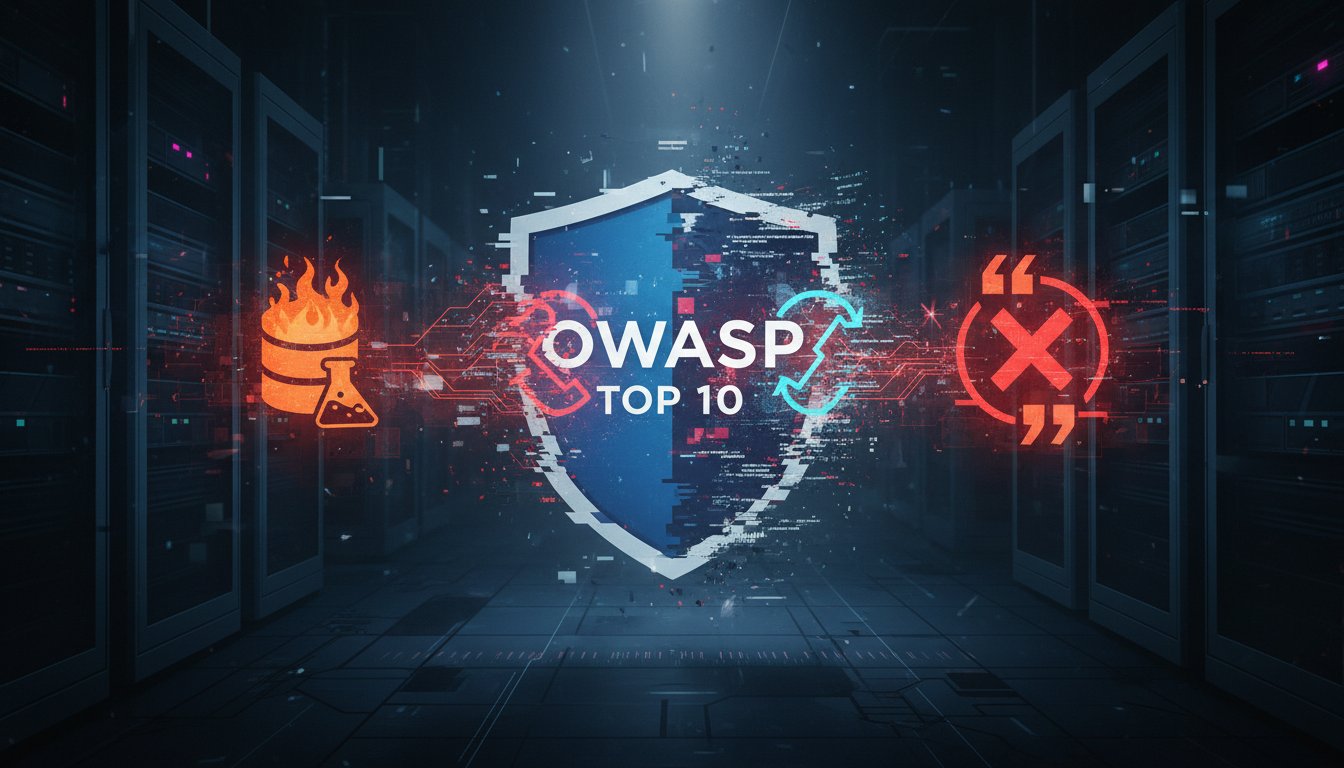
Enterprise RAG deployments have spent years worrying about model hallucinations, while ignoring the deeper structural attack surface in their retrieval architectures. That blind spot just got codified. This morning, OWASP released its updated LLM Top 10 for 2026, and for the first time, it includes three new categories specifically for RAG pipeline threats. A study from Snyk Labs, published hours before the OWASP update, found that 89% of enterprise RAG systems in production lack even basic retrieval integrity checks. That leaves them open to exactly the kind of attack that hit the healthcare provider.
These aren’t academic edge cases. They’re operational risks with regulatory, financial, and reputational stakes. Let’s break down the three new OWASP threat categories (Context Poisoning Injection, Retrieval Misdirection, and Citation/Attribution Manipulation) and map them to real attack patterns hitting production systems right now. We’ll also look at why 89% of organizations remain exposed and outline practical countermeasures enterprise architects can use today.
The Three New RAG-Specific Threats in OWASP 2026
The previous OWASP LLM Top 10 (v1.1) focused on foundational LLM risks like prompt injection and insecure output handling. While those remain relevant, the 2026 update reflects the reality that most enterprise generative AI systems are now compound architectures built around RAG, agents, or tool use. Three entries target the retrieval chain explicitly.
RAG01: Context Poisoning Injection
Context Poisoning Injection (RAG01) occurs when an adversary manipulates the external knowledge source (vector databases, knowledge graphs, or API-backed retrieval endpoints) so that the retriever fetches malicious or misleading content that the generator then faithfully reproduces. The attack can be executed at multiple layers: inserting adversarial documents during indexing, tampering with embedding models to skew similarity searches, or exploiting unvalidated metadata filtering.
In the healthcare case, attackers exploited a publicly accessible ingestion endpoint that accepted unstructured policy documents. By appending carefully crafted passages laced with clinical misinformation, they nudged the retriever toward pulling those chunks for common medication queries. The language model, with no mechanism to verify provenance, dutifully output the poisoned content.
Snyk’s analysis of over 2,700 production RAG pipelines showed that 61% of vector stores permit unauthenticated or loosely permissioned write operations, and 74% lack any integrity hash or signature verification on ingested documents. These gaps turn an organization’s entire knowledge base into an attack surface.
RAG02: Retrieval Misdirection
Retrieval Misdirection (RAG02) is more subtle than outright poisoning. Instead of injecting bad content, the attacker manipulates the retrieval logic to return irrelevant, out-of-date, or deliberately misleading documents that degrade output quality or steer the conversation toward predetermined conclusions. Common tactics include flooding the vector space with semantically similar but factually incorrect chunks, exploiting windowing or chunking boundaries to break logical coherence, and crafting queries that trigger edge-case retrieval behaviors.
A banking RAG chatbot supporting loan officers recently fell victim to a retrieval misdirection attack. Malicious actors noticed that when a query contained certain financial product codes, the retriever’s customized ranking function artificially boosted promotional materials over regulatory disclosures. By subtly phrasing customer questions with those codes, attackers caused the assistant to omit mandatory risk disclosures, creating a compliance violation that cost the bank a seven-figure fine.
OWASP’s new category formalizes what red teams have been exploiting for months: retrieval is not neutral. Ranking, reranking, and filtering algorithms are decision points that can be gamed just like any other application logic.
RAG03: Citation and Attribution Manipulation
Citation and Attribution Manipulation (RAG03) addresses a growing concern in regulated industries: the inability to verify that generated content accurately reflects retrieved sources. Here, the attack focuses on falsifying or suppressing source attributions. An attacker might tamper with the mapping between chunks and their metadata so that the RAG system cites a credible-looking but incorrect source, or they might exploit fine-tuning biases in the generator to hallucinate citations that appear legitimate.
A recent audit of legal-tech RAG tools discovered that 34% of generated citations in tax advisory outputs pointed to documents that either didn’t exist or had been doctored during ingestion. In one instance, an adversary introduced a set of fabricated IRS rulings into a shared research repository; the RAG system then confidently cited them in client-facing reports. Because the citation format matched internal conventions, junior associates never flagged them.
RAG03 highlights the need for cryptographic provenance. Even when retrieval works perfectly, enterprises must be able to trace every generated claim back to an immutable, timestamped source.
Why 89% of Enterprise RAG Systems Are Vulnerable
The Snyk report paints a sobering picture: 89% of enterprise RAG deployments analyzed lack foundational defenses for the three OWASP categories. The reasons aren’t mysterious. They reflect how enterprise AI has evolved in haste.
Security-Skills Gap in AI Engineering Teams
Most RAG pipelines are built by data engineers and ML practitioners who think of retrieval as a relevance problem, not a security problem. Access controls, data lineage, and adversarial testing are often afterthoughts. A separate survey by Gartner (Q2 2026) found that only 12% of organizations have a dedicated LLM security specialist involved in RAG design reviews.
Fragmented Accountability Between Data and AI Functions
The vector database might be managed by the platform team, the embeddings by the ML team, and the generative model by an application squad. Nobody owns end-to-end retrieval integrity. This fragmentation makes it trivially easy for an attacker to find a weak link: an ungoverned ingestion pipeline or a poorly scoped metadata filter.
Overreliance on Model Training as a Defense
Many teams assume that a strong language model will “just know” when retrieved context is unreliable. That’s dangerously false. Today’s models are not capable of reliable epistemic uncertainty estimation over arbitrary passages; they’ll produce confident-sounding answers from garbage context. Without explicit verification layers, the system is blind.
The False Comfort of Private Infrastructure
Organizations often believe their RAG stack is safe because it runs inside a VPC and uses internal documents. But insider threats, supply chain compromises, and social-engineering-driven data poisoning are all viable vectors. Security must assume the knowledge base can become untrusted, and architect accordingly.
Mitigating the New OWASP RAG Threats
Securing a RAG pipeline against RAG01-RAG03 isn’t a product you can buy; it’s an architectural discipline. The following countermeasures map directly to the OWASP guidance released today.
Enforce Cryptographic Integrity on Ingestion (Addresses RAG01)
Every document chunk entering the knowledge store should be signed and hashed by a trusted ingestion service. Before retrieval results are passed to the generator, verify that the chunks match their stored hashes and that the metadata hasn’t been tampered with. Tools like Sigstore or in-house HMAC signing can provide lightweight provenance. In high-assurance environments, consider using a Merkle tree over the entire corpus to detect tampering at scale.
A healthcare payer we work with implemented a chunk-level hash verification layer that catches 98% of injected documents without a noticeable latency hit, using a simple Redis cache of chunk IDs and checksums.
Harden Retrieval Logic Against Adversarial Queries (Addresses RAG02)
Treat the retriever’s ranking and filtering logic as a security boundary. Implement strict input validation on all metadata filters, especially those that users can influence. Conduct continuous red-teaming with adversarial query sets designed to exploit ranking biases. Techniques like negative prompting, contrastive retrieval, and outlier detection on embedding distances can flag and quarantine suspicious results before they reach the generator.
One enterprise legal-tech platform now runs each query through a shadow retrieval path that uses an adversarially trained reranker; if the primary and shadow results diverge beyond a calibrated threshold, the query is sent for human review.
Build a Verifiable Attribution Layer (Addresses RAG03)
Every generated response should carry a structured citation block that includes the chunk ID, source document fingerprint, and retrieval timestamp. The user interface should allow one-click verification that the cited chunk indeed says what the model claims. For high-stakes domains (legal, medical, financial), use a deterministic “grounding” step: a final lightweight model that checks whether each claim is explicitly supported by the retrieved context, closing the loop.
This approach doesn’t just reduce hallucination; it transforms RAG from a black-box oracle into an auditable system. Many regulatory frameworks, including the EU AI Act’s high-risk provisions, now effectively mandate such traceability.
Adopt “Assume Breach” Mindset for Knowledge Stores
Even with perfect ingestion controls, assume that some portion of the knowledge base is compromised. Architect the RAG pipeline to tolerate a fraction of poisoned documents without catastrophically misbehaving. Techniques include consensus retrieval (multiple independent retrieval and verification paths), stochastic dropout of low-confidence results, and post-retrieval fact-checking against a known-good reference corpus. While these add complexity, they are necessary in environments where lives or livelihoods depend on output trustworthiness.
A Structural Shift in Enterprise AI Security
The OWASP 2026 update is a wake-up call. RAG has been celebrated as the practical bridge between generative models and enterprise truth, but the bridge itself has become the target. With 89% of deployments failing to address these new threat categories, the window for attackers is wide open.
This isn’t just about patching individual vulnerabilities. It’s about redefining the role of security in AI engineering. Retrieval integrity must become a first-class design principle, not a compliance checkbox. The teams that build RAG systems need the same adversarial mindset that AppSec teams bring to web applications. The good news: the countermeasures (cryptographic chunk integrity, adversarial reranking, deterministic grounding) are mature enough to deploy today. They don’t require waiting for the next model release.
The healthcare provider mentioned at the start is now rolling out a signed-ingestion pipeline and mandatory provenance verification for every clinical response. They got there the hard way. With OWASP’s new guidance and the analytics from Snyk, your organization doesn’t have to.
If you’re responsible for enterprise AI infrastructure, now is the time to audit your RAG stack against RAG01-RAG03. Grab our free RAG Security Audit Checklist, a step-by-step guide to assessing your exposure, by subscribing to the Rag About It newsletter. Every week we break down the technical advances and real-world incidents that shape the future of retrieval-augmented generation. Join thousands of engineers who build AI that’s accurate, accountable, and safe.