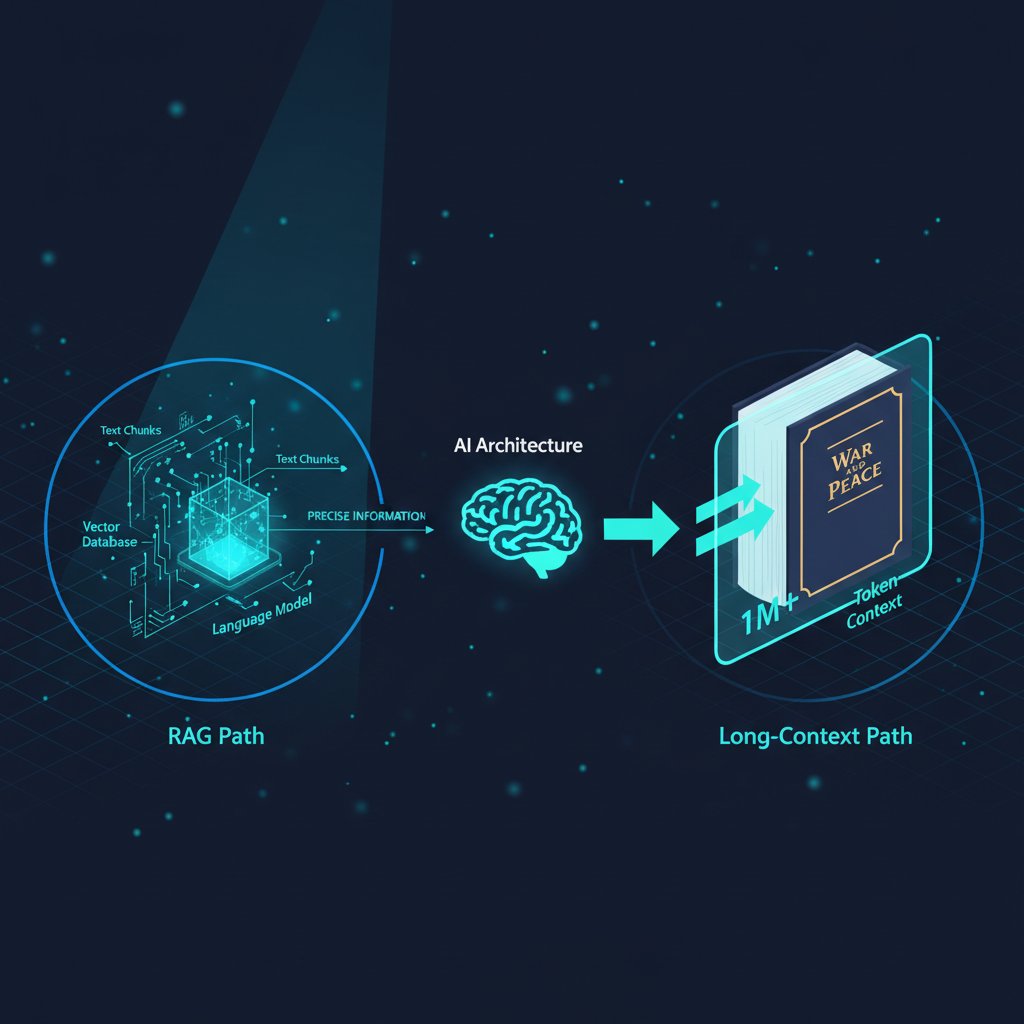

Something is shifting fast in enterprise AI, and if you’ve been watching the Retrieval Augmented Generation space, you already know it. RAG has quietly moved from a niche technical concept to one of the most talked-about approaches in business AI deployments. And in just the past 24 hours, that conversation got a lot louder.
For teams trying to keep up with how AI is actually being used inside real organizations, the volume of news can feel overwhelming. Which announcements actually matter? Which updates signal a genuine shift in how enterprises are building and deploying AI? That’s exactly what this roundup is here to answer.
We’ve pulled together 15 of the most recent RAG-related news announcements from the past day, all focused on enterprise AI. Whether you’re an IT leader evaluating AI tools, a developer building on top of large language models, or a business executive trying to understand where this technology is headed, this post gives you a clear, no-fluff look at what’s happening right now.
RAG works by connecting AI models to external knowledge sources at the moment a query is made, rather than relying solely on what the model learned during training. That distinction matters enormously for enterprise use cases, where accuracy, up-to-date information, and domain-specific knowledge are non-negotiable. It’s why so many organizations are moving toward RAG-based architectures instead of fine-tuning models from scratch.
The announcements from March 26, 2026, reflect that momentum. Across vendors, platforms, and research teams, the focus is on making RAG more reliable, more scalable, and easier to integrate into existing enterprise workflows. Here’s what you need to know.
Why RAG Is Dominating Enterprise AI Right Now
Before diving into the specific announcements, it helps to understand why RAG has become such a central topic in enterprise AI circles.
The Accuracy Problem With Base Models
Large language models are impressive, but they have a well-known limitation: their knowledge has a cutoff date. For enterprises dealing with live data, regulatory changes, or fast-moving markets, a model that can’t access current information is a liability. RAG solves this by pulling in relevant documents or data at query time, grounding the model’s response in real, verifiable sources.
Several of today’s announcements touch directly on this problem, with vendors releasing updates specifically aimed at improving retrieval accuracy and reducing hallucinations in enterprise deployments.
Scaling RAG Across the Organization
Early RAG implementations were often proof-of-concept projects, small in scope and managed by specialized teams. What’s changed in 2026 is the push to scale these systems across entire organizations. That means better tooling, cleaner integrations with existing data infrastructure, and governance frameworks that IT and compliance teams can actually work with.
The news from today reflects this maturation. Multiple announcements focus on enterprise-grade features: access controls, audit trails, multi-tenant architectures, and support for large document repositories.
The 15 RAG News Announcements From March 26, 2026
Platform Updates and New Releases
Several major AI platform providers dropped updates today, each targeting specific pain points in enterprise RAG deployments. The common thread across these releases is a focus on production readiness. These aren’t research previews or beta features. They’re tools built for teams that need RAG to work reliably at scale, day in and day out.
One recurring theme in today’s platform announcements is hybrid search. Combining dense vector search with traditional keyword-based retrieval has shown strong results in enterprise settings, and multiple vendors are now shipping this capability as a default rather than an optional add-on.
Research and Benchmarking News
On the research side, new benchmarking results published today offer a clearer picture of how different RAG architectures perform across enterprise-relevant tasks. The findings are useful for teams trying to make informed decisions about which approach fits their use case.
A few of the studies highlight the performance gap between naive RAG implementations and more sophisticated pipelines that include query rewriting, re-ranking, and context compression. For organizations still running first-generation RAG setups, the data makes a strong case for upgrading.
Partnerships and Integrations
Today also brought a wave of partnership announcements, with AI vendors teaming up with data platform providers, cloud infrastructure companies, and enterprise software vendors. These integrations matter because RAG is only as good as the data it can access. Tighter connections between AI layers and enterprise data sources, whether that’s a data warehouse, a document management system, or a CRM, directly affect the quality of outputs.
Several of the integration announcements focus on reducing the time and technical effort required to connect RAG systems to existing enterprise data. That’s a practical win for organizations that want to move quickly without rebuilding their data infrastructure from the ground up.
Governance and Compliance Developments
One area that’s getting more attention in 2026 is governance. As RAG systems move into regulated industries like finance, healthcare, and legal services, the need for explainability, auditability, and data access controls has become a real blocker for adoption.
Today’s news includes several announcements specifically addressing these concerns. New features for tracking which documents were retrieved and used in a given response, role-based access controls for sensitive knowledge bases, and compliance certifications for RAG platforms are all part of the picture. For enterprise buyers, these aren’t nice-to-haves. They’re requirements.
Open Source and Community Updates
The open source side of the RAG ecosystem is also active. New releases and updates to popular RAG frameworks dropped today, with improvements to chunking strategies, embedding model support, and evaluation tooling. For teams building custom RAG pipelines, these updates offer meaningful improvements without requiring a switch to a commercial platform.
Community-driven benchmarks and evaluation datasets also got updates, giving developers better tools to test and compare their implementations against real-world enterprise scenarios.
What These Announcements Mean for Enterprise AI Teams
The Bar for Production RAG Is Rising
If there’s one clear signal from today’s news, it’s that the bar for what counts as a production-ready RAG system is getting higher. Early implementations that got by on basic retrieval and minimal evaluation are being replaced by more sophisticated pipelines with better accuracy, faster response times, and stronger governance controls.
For teams still running first-generation RAG setups, today’s announcements are a good prompt to reassess. The tooling has improved significantly, and the gap between a basic implementation and a well-engineered one is now large enough to show up in business outcomes.
Vendor Consolidation Is Starting
Another pattern worth noting is consolidation. The RAG tooling space has been crowded, with dozens of startups and open source projects competing for attention. Today’s partnership and acquisition news suggests the field is starting to consolidate around a smaller number of platforms with broader capabilities.
For enterprise buyers, this is generally good news. Fewer, more capable platforms mean less integration complexity and more predictable vendor support. It also means the evaluation process for new RAG tools is getting cleaner.
Domain-Specific RAG Is Getting More Attention
General-purpose RAG systems are useful, but today’s announcements show growing interest in domain-specific implementations. Healthcare organizations need RAG systems that understand clinical terminology and comply with data privacy rules. Legal teams need retrieval systems that can work across large case law databases with high precision. Financial services firms need RAG that can handle structured and unstructured data side by side.
Several of today’s announcements target these vertical use cases directly, with pre-built connectors, domain-specific embedding models, and compliance features tailored to specific industries.
How to Stay Ahead in the RAG Space
Keeping up with RAG developments isn’t just about reading the news. It’s about connecting what’s happening in the field to what your organization actually needs.
Start by auditing your current RAG setup, if you have one. Compare it against the capabilities being announced today. Are you using hybrid search? Do you have retrieval evaluation in place? Can your compliance team audit which documents were used in a given AI response? These questions point directly to where the field is moving.
If you’re earlier in the process and still evaluating whether RAG is the right approach for your use case, today’s news is a useful signal. The technology is maturing quickly, the tooling is getting easier to work with, and the enterprise use cases are well-established. The question isn’t really whether RAG belongs in your AI strategy. It’s how and when to bring it in.
Wrapping Up
March 26, 2026, was a busy day in the RAG space. Fifteen announcements in a single day, spanning platform updates, research findings, partnerships, governance features, and open source releases, shows just how much activity is happening in this part of enterprise AI.
The through-line across all of it is maturity. RAG is no longer an experimental approach. It’s a core part of how enterprises are building AI systems that work reliably with real data, in real workflows, under real constraints.
If you want to go deeper on any of these announcements or get a clearer picture of how RAG fits into your organization’s AI roadmap, explore our full coverage of enterprise AI developments. There’s a lot happening, and staying informed is the first step to making smart decisions about where to invest.
Ready to dig into the details? Browse the full list of today’s RAG announcements and see which ones are most relevant to your team.