
Voice-enabled enterprise support has fundamentally changed how organizations respond to customer inquiries, but most implementations struggle with a critical limitation: they retrieve stale information. You ask your voice agent a compliance question, it retrieves outdated regulatory guidance, and suddenly you’re exposing your company to audit failures. The gap between what your knowledge base contains and what’s actually compliant in today’s regulatory environment has become a liability. Traditional RAG systems retrieve information from static databases that require manual updates, which means compliance changes often arrive weeks—or months—after regulatory bodies publish them.
ElevenLabs’ Conversational AI 2.0 now enables natural, human-like voice responses, but without dynamic knowledge management backing those responses, you’re just wrapping outdated information in better speech synthesis. Real enterprise compliance demands something different: a voice-first RAG system that retrieves from knowledge graphs that update in real-time as regulations change, audit trails auto-generate as your agent responds, and every voice interaction carries verified source citations.
This article walks through a complete technical blueprint for building enterprise-grade voice compliance agents that combine ElevenLabs’ natural voice synthesis with real-time knowledge graph updates. You’ll learn exactly how to structure retrieval latency under 200ms, implement dynamic knowledge updates that trigger on regulatory changes, and ensure every voice response includes auditable compliance chains. The result is a support system that doesn’t just sound human—it actually knows what’s compliant, right now.
The Voice-RAG Compliance Architecture: Why Static Retrieval Fails
Most enterprise RAG implementations treat voice synthesis as a cosmetic layer on top of existing retrieval pipelines. You build your vector database, implement keyword search with BM25, maybe add some ranking logic, and then pipe the output through text-to-speech. This approach has a fundamental problem: it doesn’t account for the temporal nature of compliance.
Regulatory environments don’t stand still. GDPR enforcement interpretations evolve, healthcare billing codes update quarterly, financial reporting standards shift with SEC guidance. If your RAG system retrieves from a knowledge base that was current six weeks ago, you’re not providing accurate compliance guidance—you’re automating compliance risk.
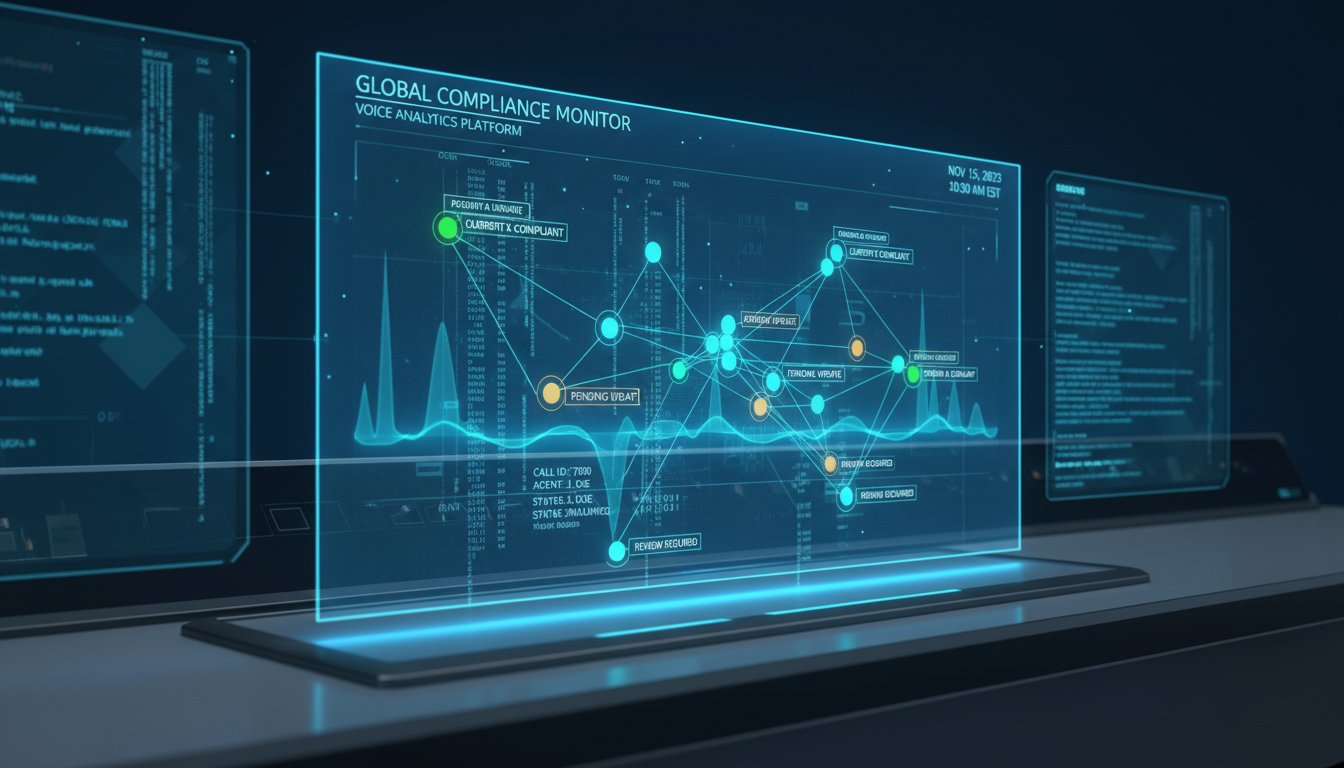
The breakthrough comes from decoupling your retrieval architecture into two distinct layers. The first layer handles real-time information retrieval using hybrid search (BM25 + vector embeddings) against your primary knowledge base—this gets you speed and semantic accuracy. The second layer wraps that retrieval in a dynamic knowledge graph that maintains temporal relationships and regulatory provenance. When regulations change, the knowledge graph updates, and the next retrieval automatically surfaces current guidance.
ElevenLabs Conversational AI 2.0 adds a critical third dimension: natural voice that understands conversational context. The system can now handle follow-up questions that reference previous responses, manage turn-taking naturally, and produce voice output that conveys nuance—especially important when communicating compliance requirements that have conditional logic or exceptions.
Core Component 1: Real-Time Knowledge Graph Architecture
The foundation of voice compliance agents isn’t actually the voice layer—it’s the knowledge structure beneath retrieval. Most enterprises build flat document stores where a “compliance policy” document gets stored once and rarely updates meaningfully. Real-time knowledge graphs invert this model: they store facts, relationships, and temporal metadata that allow the system to know which guidance applies in which time periods and under which conditions.
Here’s the structural pattern that works at enterprise scale:
Entity Layer: Store compliance entities as nodes—regulations, rulings, policy documents, compliance requirements. Each node carries:
– Regulatory source (SEC ruling, GDPR guidance, internal policy)
– Effective date and expiration date (temporal boundaries)
– Certainty score (is this guidance definitive or interpretive?)
– Authority level (which regulatory body issued this?)
– Related entities (which requirements does this regulation link to?)
Relationship Layer: Connect entities with typed relationships—”IMPLEMENTS”, “SUPERSEDES”, “CLARIFIES”, “CONFLICTS_WITH”. These relationships make the temporal logic explicit. When a new SEC guidance supersedes previous guidance, you add a SUPERSEDES relationship. Your retrieval system can then filter out outdated information automatically.
Evidence Layer: Store the source trail—the actual regulation text, ruling document, or policy memo that backs each compliance fact. This becomes critical when ElevenLabs synthesizes voice responses; every claim needs citation.
Implementing this requires a graph database rather than traditional vector search alone. Neo4j, ArangoDB, or even a well-structured PostgreSQL with JSON columns can work, but the key is maintaining the temporal and relationship metadata that enables real-time accuracy.
Core Component 2: Integrating ElevenLabs Voice with Compliance Retrieval
Once your knowledge graph is structured for real-time accuracy, integrating ElevenLabs Conversational AI 2.0 requires thinking about the voice layer differently than traditional text-to-speech. You’re not just converting text strings to audio; you’re building a conversational agent that understands compliance context and can explain regulatory requirements naturally.
Here’s the integration pattern:
Step 1: Query Expansion with Context
When a user asks your voice agent a compliance question, capture not just the question text but the conversational context. ElevenLabs’ Conversational AI 2.0 handles natural turn-taking and pauses, which means the system needs to track: What was the previous question? Does this question reference prior guidance? Are there conditional branches the user is exploring?
Example: User asks “Are we compliant if we delete customer data within 30 days?” The system should recognize this as a GDPR-related compliance question, but also note that it’s conditional (the 30-day threshold). The query expands to: GDPR + data deletion + 30-day timeline + our industry vertical.
Step 2: Hybrid Retrieval Against Knowledge Graph
Execute both keyword search (BM25) and semantic search (vector embeddings) against your knowledge graph:
– BM25 retrieves exact-match guidance (search for “30 days” and “GDPR” directly in regulation text)
– Vector embeddings retrieve semantically similar guidance (find regulations about data retention requirements, even if they don’t use the exact terms)
– The knowledge graph filters results by temporal relevance (only show regulations currently in force)
– Relationship traversal adds connected requirements (if GDPR applies, also surface related requirements from your internal compliance framework)
Latency target: sub-200ms end-to-end. At this speed, the voice conversation feels natural; delays longer than 300ms create uncomfortable pauses.
Step 3: Compliance Chain Construction
Before handing text to ElevenLabs, construct a compliance chain—a structured representation of the reasoning path from regulation to answer. This chain includes:
– Primary authority (which regulation governs this?)
– Temporal validity (is this guidance current as of today?)
– Certainty level (is this a definitive requirement or an interpretation?)
– Exception handling (are there conditions where this doesn’t apply?)
Example compliance chain:
GDPR Article 17 (Right to Erasure)
├─ Primary: GDPR Regulation (EU) 2016/679
├─ Valid: 2018-05-25 to [current]
├─ Certainty: Definitive requirement
├─ 30-day deletion requirement
│  ├─ Exception: Storage for legal claims
│  └─ Exception: Storage for statistical purposes (anonymized)
└─ Our interpretation: Applied to customer data in [regions]
Step 4: Voice Synthesis with ElevenLabs API
Pass the compliance chain to ElevenLabs Conversational AI 2.0. The key parameters:
from elevenlabs import ElevenLabs

client = ElevenLabs(api_key="sk_...")

response = client.conversational.generate(
    agent_id="compliance-agent-001",
    message=f"""
    User question: {user_query}
    Compliance chain: {compliance_chain}
    Response should include:
    - Direct answer to compliance question
    - Primary regulatory basis
    - Any exceptions or conditions
    - Internal policy implications
    """,
    voice_id="EXAVITQu4vr4xnSDp5HJ",  # Professional compliance advisor tone
    model="eleven_turbo_v2",  # Fast processing for real-time
    enable_turn_taking=True,  # Natural conversation flow
    temperature=0.3  # Lower temperature = more factual, less creative
)

audio_stream = response.audio_stream
The enable_turn_taking=True parameter is critical here. It allows ElevenLabs to handle natural pauses and conversational turns, so when the agent says “There are three important points,” it can pause for emphasis rather than rushing through.
Step 5: Audit Trail Generation
After synthesizing voice, auto-generate an audit trail entry:
audit_entry = {
    "timestamp": datetime.now().isoformat(),
    "user_query": user_query,
    "compliance_chain_id": compliance_chain.id,
    "retrieved_regulations": [reg.source for reg in compliance_chain.authorities],
    "voice_response_id": response.id,
    "user_id": current_user.id,
    "session_id": current_session.id
}
store_audit_trail(audit_entry)
This audit trail becomes your compliance evidence when regulators ask “Can you prove your system told users correct guidance on this date?”
Core Component 3: Dynamic Knowledge Graph Updates Triggered by Regulatory Changes
The system isn’t truly real-time unless your knowledge graph actually updates when regulations change. This requires monitoring regulatory sources and propagating changes into your knowledge graph automatically.
Real-Time Regulatory Monitoring
Set up subscriptions to regulatory change feeds:
– SEC.gov RSS for financial compliance
– Federal Register API for healthcare (HIPAA) and general regulations
– EU Official Journal for GDPR updates
– Industry-specific updates (HL7 for healthcare, PCI DSS for payments)
Example monitoring pipeline:
import feedparser
import requests
from datetime import datetime

def monitor_regulatory_changes():
    # Monitor Federal Register for healthcare updates
    fr_url = "https://www.federalregister.gov/documents/search.atom?agencies[]=DHHS&publish_date[gte]=today"
    feed = feedparser.parse(fr_url)

    for entry in feed.entries:
        regulation_text = entry.summary

        # Extract key metadata
        if "compliance" in regulation_text.lower() or "requirement" in regulation_text.lower():
            new_regulation = {
                "source": "Federal Register",
                "effective_date": entry.published,
                "text": regulation_text,
                "url": entry.link,
                "metadata": extract_compliance_entities(regulation_text)
            }

            # Update knowledge graph
            update_knowledge_graph(new_regulation)

            # Notify compliance team for review
            notify_compliance_team(new_regulation, urgency="high")
Intelligent Knowledge Graph Merging
When new regulations arrive, the system shouldn’t blindly append them—it should recognize relationships and potential conflicts:
def integrate_new_regulation(new_reg, existing_graph):
    # Find related entities in existing graph
    related = existing_graph.find_related_regulations(
        new_reg.topic,
        new_reg.industry,
        similarity_threshold=0.75
    )

    for existing_reg in related:
        # Check for conflicts
        if is_conflicting(new_reg, existing_reg):
            # Create SUPERSEDES relationship if new_reg is more recent
            if new_reg.effective_date > existing_reg.effective_date:
                existing_graph.add_relationship(
                    new_reg, "SUPERSEDES", existing_reg
                )
                existing_reg.mark_deprecated()

        # Check for clarification
        elif is_clarifying(new_reg, existing_reg):
            existing_graph.add_relationship(
                new_reg, "CLARIFIES", existing_reg
            )

    # Add new regulation to graph
    existing_graph.add_node(new_reg)
    return existing_graph
Propagating Changes to Voice Agent
When the knowledge graph updates, the voice agent’s behavior should shift immediately. This requires:
- Version management: Each retrieval operation should tag which knowledge graph version it’s using
- Change notification: When significant updates occur (e.g., a compliance requirement changes), notify active users
- Fallback handling: If the knowledge graph is updating, use a stable snapshot for ongoing queries, then update when the query completes
def handle_knowledge_graph_update(update_event):
    # Snapshot current graph version for in-flight queries
    current_version = knowledge_graph.get_version()

    # Apply updates
    knowledge_graph.apply_update(update_event)

    # New queries immediately use updated graph
    new_version = knowledge_graph.get_version()

    # Notify users if this is a significant change
    if update_event.severity == "high":
        notify_users_of_compliance_change(update_event)
Latency Optimization: Keeping Voice Conversations Natural
The biggest challenge with voice RAG isn’t accuracy—it’s latency. Users expect voice responses within 300-500ms. If your retrieval takes 800ms and voice synthesis takes another 500ms, you’ve got a 1.3-second delay that feels like a broken system, not a natural conversation.
Here’s how to optimize each component:
Retrieval Latency (Target: <200ms)
– Pre-compute vector embeddings for all regulatory text, not just on-demand
– Use approximate nearest neighbor search (FAISS, Annoy) instead of exact similarity
– Implement a two-stage retrieval: fast first stage (keyword + approximate vector), detailed second stage (if needed)
– Cache common compliance queries (“GDPR + data deletion” is asked thousands of times per day)
Knowledge Graph Query Latency (Target: <50ms)
– Index graph relationships so filtering by temporal validity is O(1) not O(n)
– Pre-compute relationship traversals for common compliance chains
– Store frequently accessed paths as materialized views
Voice Synthesis Latency (Target: <300ms)
– ElevenLabs’ Conversational AI 2.0 streams audio, so synthesis happens in parallel with playback—don’t wait for complete audio generation
– Use streaming endpoints:
response = client.conversational.generate_stream(
    agent_id="compliance-agent-001",
    message=compliance_query,
    voice_id="EXAVITQu4vr4xnSDp5HJ"
)

# Start playback immediately as chunks arrive
for audio_chunk in response:
    play_audio_chunk(audio_chunk)
End-to-End Optimization
Profile your actual latency:
import time

start = time.time()
query_result = retrieve_compliance_guidance(user_query)
retrieval_time = time.time() - start  # Should be <200ms

start = time.time()
audio_response = synthesize_with_elevenlabs(query_result)
synthesis_time = time.time() - start  # Should be <300ms

total_latency = retrieval_time + synthesis_time
if total_latency > 500:
    log_performance_issue(total_latency)
Implementing Compliance Audit Trails with Voice Interactions
When your compliance agent responds to a question via voice, that interaction becomes part of your regulatory record. You need to prove:
1. What was asked
2. What was answered
3. Which regulations backed that answer
4. When this interaction occurred
5. Who was involved
Build this into your voice RAG pipeline automatically:
class ComplianceAuditLogger:
    def log_voice_interaction(self, interaction_data):
        audit_record = {
            "interaction_id": str(uuid.uuid4()),
            "timestamp": datetime.now().isoformat(),
            "channel": "voice",

            # User context
            "user_id": interaction_data["user_id"],
            "user_role": interaction_data["user_role"],
            "department": interaction_data["department"],

            # Query details
            "user_query_text": interaction_data["query"],
            "query_intent": categorize_intent(interaction_data["query"]),
            "relevant_regulations": [
                {
                    "regulation_id": reg.id,
                    "source": reg.source,
                    "effective_date": reg.effective_date,
                    "retrieved_rank": idx
                }
                for idx, reg in enumerate(interaction_data["retrieved_regulations"])
            ],

            # Response details
            "agent_response_text": interaction_data["response_text"],
            "agent_response_audio_id": interaction_data["audio_id"],
            "confidence_score": interaction_data["confidence"],

            # System state
            "knowledge_graph_version": interaction_data["kg_version"],
            "retrieval_latency_ms": interaction_data["latency"],

            # Compliance flags
            "contains_exceptions": interaction_data["has_exceptions"],
            "requires_review": interaction_data["flagged_for_review"]
        }

        # Store in immutable audit log
        store_in_compliance_database(audit_record)

        # Also index for regulatory search
        index_for_audit_search(audit_record)

        return audit_record["interaction_id"]
When regulators ask “What guidance did you give users on GDPR on March 15th?”, you can retrieve and replay that exact voice interaction with full provenance.
Putting It Together: A Complete Voice Compliance Agent Workflow
Here’s how all these components work together in a real system:
-
User initiates voice conversation: “Am I compliant with GDPR if I delete customer data within 30 days?”
-
System captures context: Identifies this as a GDPR compliance question, notes the temporal constraint (30 days), determines the user’s industry/role for context
-
Real-time knowledge graph retrieval: Pulls current GDPR Article 17 guidance, checks temporal validity (still in force), retrieves related internal policies, identifies exceptions
-
Compliance chain construction: Builds the evidence path from regulation to answer, includes exception handling
-
Voice synthesis with ElevenLabs: “Yes, GDPR Article 17 allows you to delete personal data within 30 days upon request. However, there are two exceptions: you may retain data if required for legal claims, or if you anonymize it for statistical purposes. Here’s how this applies to your organization…”
-
Audit trail generation: Records the query, answer, retrieved regulations, user context, timestamp, and audio ID
-
Real-time knowledge graph monitoring: System continuously monitors regulatory feeds. When a new GDPR ruling appears that affects data deletion timelines, it updates the knowledge graph, and future queries get new guidance
Moving Forward: Building Your Voice-First Compliance Agent
The shift toward voice-powered enterprise support is already happening—but most implementations treat voice as cosmetic. The real competitive advantage comes from combining natural voice synthesis with real-time compliance knowledge.
ElevenLabs Conversational AI 2.0 provides the voice foundation. Real-time knowledge graphs provide the compliance accuracy. Together, they create enterprise compliance agents that don’t just sound human—they actually know what’s compliant, right now, with full audit trails backing every answer.
Your next step is identifying your highest-compliance-risk questions. Where are your users asking compliance questions that require current regulatory knowledge? That’s where to start building voice agents. Start small—maybe just GDPR compliance questions for your support team, then expand. Try ElevenLabs’ Conversational AI 2.0 for free now and build your first voice compliance agent this week.