
Your RAG system was a marvel of engineering the day it launched. Response latency sat comfortably at 700 milliseconds, hallucination rates hovered below 5%, and every retrieval felt crisp and contextually precise. The dashboard you presented to leadership illustrated a clean, upward-trending line toward enterprise AI maturity. Fast forward 90 days. The same system now generates responses that miss the mark. Users are complaining about answers that feel stale or vaguely wrong. Your engineers are chasing ghosts in the generation layer, adjusting temperature settings, swapping models, and tweaking system prompts. No one’s looking at the silent killers slowly degrading the system’s performance from the inside out.
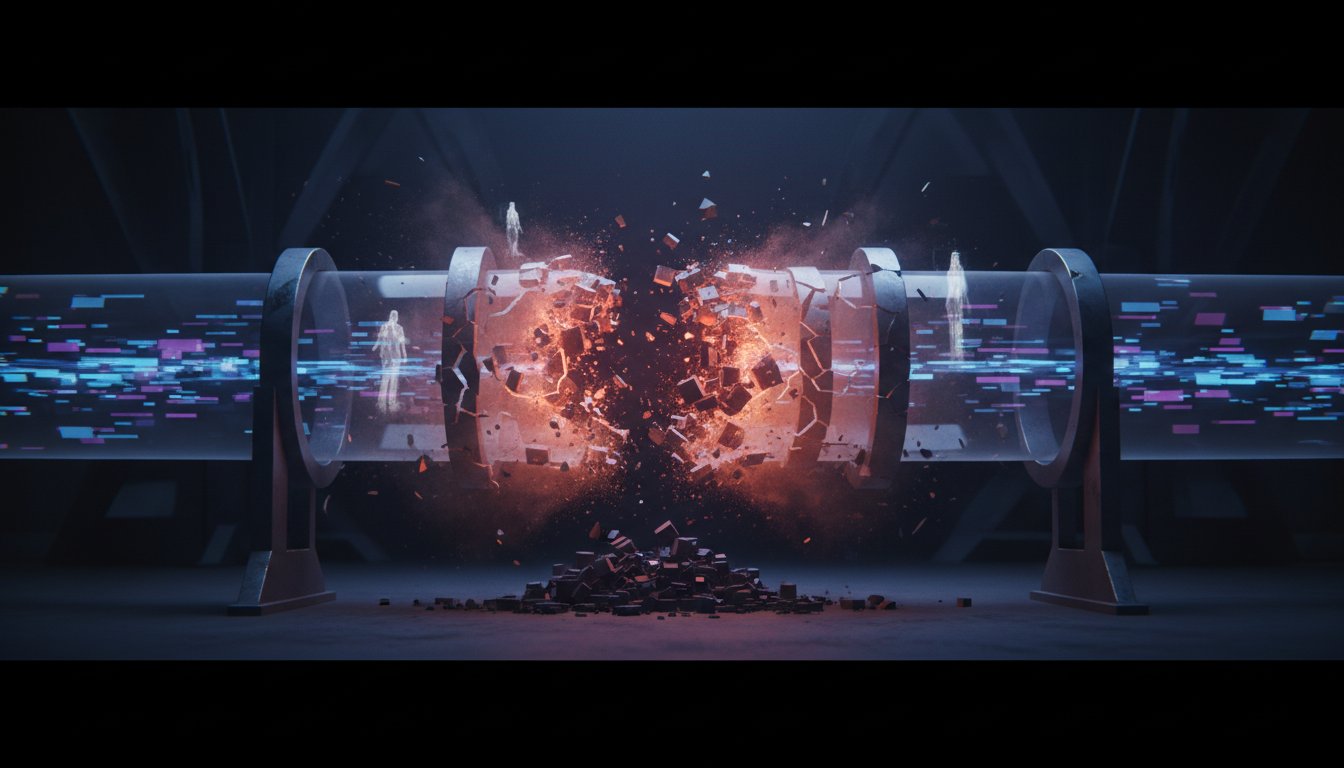
McKinsey Digital’s latest enterprise AI operations report reveals a worrying stat: 71% of RAG pipeline failures originate at the retrieval stage, yet 80% of improvement efforts are directed at the generation layer. This misalignment creates a vicious cycle. Teams apply generative band-aids to retrieval wounds, and when those fixes don’t stick, frustration mounts. In reality, RAG performance degradation isn’t typically a sudden, catastrophic crash. It’s a quiet erosion. Vector indexes drift. Document freshness outpaces re-indexing cadences. Chunk boundaries that once made sense fragment under the weight of new, differently structured source material.
This post walks you through five specific, production-proven pipeline killers that degrade RAG performance by up to 60% over a three-month period. Each is drawn from operational data shared by teams running RAG at scale, with remediation steps you can implement starting today.
The 5 Hidden Pipeline Killers
1. The Retrieval-Generation Gap
The core problem is a fundamental misallocation of diagnostic energy. When users report poor answers, the instinct is to interrogate what the language model produced, not what it received. This bias is costly. Benchmarking data from the AI RMF 600-1 guidance from NIST emphasizes that retrieval precision, how accurately your system fetches the right chunks, is the single strongest predictor of end-to-end RAG quality. Fluency without factual grounding is just a well-written hallucination.
Why the Gap Exists
The gap persists for two reasons. First, retrieval failures are often silent. A hallucinated answer screams for attention, but a missing document simply produces a slightly less specific or slightly more generic response. Without granular monitoring, this signal is lost. Second, the tooling ecosystem leans toward generation metrics. It’s easier to run a ROUGE or BLEU score on output text than it is to instrument vector database performance or chunk relevance at query time.
Bridging the Gap Systematically
To close the gap, you need to build a monitoring stack that places equal weight on retrieval health. This means:
- Instrumenting retrieval precision: Compare the semantic similarity of retrieved chunks against a gold-standard set of expected documents for canonical queries.
- Measuring recall completeness: Does the retrieval step capture all the information needed to answer the question, even if some irrelevant chunks are also returned?
- Tracking latency by pipeline stage: Separate out embedding latency, vector search time, and re-ranking time so you know exactly where slowdowns occur.
Forrester Research recently highlighted that organizations implementing structured evaluation frameworks that include these retrieval-level metrics see 3.2x lower hallucination rates in production than teams that focus solely on generation. The key is to make retrieval metrics visible and alarmable, transforming a silent killer into a loudly flashing dashboard indicator.
2. Chunk Fragmentation Over Time
At launch, your chunking strategy felt elegant. You split documents by logical sections, maintaining semantic integrity. But documents aren’t static. They are edited, appended, and restructured. A support article that was once a simple, 500-word page grows into a 3,000-word reference with tables, lists, and embedded warnings. Your original chunk boundaries, designed for the initial version, now slice through the middle of critical procedures, splitting context in ways that render retrieval nonsensical.
The Invisible Drift
Chunk fragmentation is insidious because individual chunks might still look correct. The vector database holds the right content. The problem is that the unit of retrieval (the chunk) no longer represents a coherent, self-contained piece of information. You begin to see patterns like:
- A retrieval step returning chunk A and chunk D but missing the key table stuck in chunk B.
- Context windows filling with fragments that reference prerequisites the model can’t see.
- Re-ranking models scoring poorly on coherence because the chunk itself has lost its narrative thread.
Detection and Remediation
You can’t manually review every chunk. Instead, implement automated coherence scoring. Run a lightweight, rule-based pass on each chunk after re-indexing events. Check for patterns like:
- Sentences that start with “As mentioned above” or “See step 3”. These are red flags that the chunk is severed from its context.
- Chunks ending abruptly without a sentence terminator.
- Significant variance in chunk sizes that suggests your fixed-size splitting strategy is failing against new content shapes.
Microsoft’s updated GraphRAG 2.0 implementation implicitly addresses this by using knowledge graph structures that are less brittle than chunk boundaries. For teams not ready to adopt GraphRAG, at the very least you should schedule re-indexing with chunk-quality telemetry every time a document source updates significantly, rather than on a fixed calendar schedule.
3. Vector Index Drift
The vector index is the core retrieval engine. Yet it’s often treated like a database that simply needs fresh inserts. Over time, two damaging phenomena occur: semantic drift and index imbalance.
Semantic Drift
Semantic drift happens when the embedding model that created your initial vector representations is updated, replaced, or fine-tuned without a full re-index. A query embedded with the new model produces vectors that live just outside the neighborhood of your stored chunks. The result isn’t a dramatic empty result set, it’s a slow shift toward less relevant documents. Scores drop from 0.92 to 0.87 to 0.81, and suddenly your top-k retrieval is effectively random.
Index Imbalance
Index imbalance builds as you add documents that skew toward specific topics. A RAG system built for general product support might ingest a sudden influx of API documentation, fundamentally shifting the centroid of your vector space. Queries that used to reliably return user-facing help content now attract developer-oriented chunks that don’t answer the original question.
Stabilizing Your Index
- Version your embedding models: Treat embedding model updates like database schema migrations. A new model version requires a full, verified re-index, not a rolling update.
- Monitor query-cluster drift: Periodically compute the centroid of your top 1,000 most frequent query embeddings and check its distance from the index centroid.
- Apply per-collection cardinality limits: Large imbalances in document type counts can be corrected by oversampling rare categories or applying retrieval-time filters that ensure representative diversity.
Gartner’s Q2 2026 assessment predicts that by 2027, 60% of enterprise RAG implementations will fail audit requirements. A significant contributor will be these unmonitored index drifts, which silently undermine retrieval transparency and produce outcomes that can’t be reliably reproduced, a key compliance requirement under both the EU AI Act and internal governance frameworks.
4. Citation Forgery in Agentic RAG
Agentic RAG architectures (where specialized agents reason about when and how to retrieve) have measurably improved response quality. Google Vertex AI Search and Microsoft’s Azure AI Search are both shipping agentic capabilities, and early adopters report substantial gains. But these systems introduce a new pipeline killer: citation forgery.
How It Happens
An agentic system might include a retrieval agent, a synthesis agent, and a verification agent. The retrieval agent fetches chunks and attaches source metadata. The synthesis agent generates a coherent answer. But if the verification agent is misconfigured or omitted due to latency concerns, the synthesis agent can produce claims that appear to be backed by a citation but either misattribute the source or, worse, fabricate a citation entirely.
OWASP has formally recognized this risk by adding Citation Forgery (LLM12:2025) to the LLM Top 10. It’s a threat that sits at the intersection of security and compliance, because an auditor reviewing your system’s outputs might believe a response was grounded in a legitimate retrieved document when it was not.
Defensive Patterns
- Mandatory citation verification: Run a deterministic check post-generation that verifies each citation is traceable to a chunk returned by the retrieval step. A mismatch should trigger either a suppression of the claim or a clear “unverified” annotation.
- Immutable retrieval logs: Use append-only logging to create a trail showing exactly what was retrieved for each query. Anthropic’s Citations API now supports structured output formats designed specifically for these audit trails.
- Agent action replay: For high-stakes domains governed by the EU AI Act’s high-risk AI system provisions, implement the ability to deterministically replay the agent’s retrieval and generation decisions for a given query. This demonstrates explainability for retrieval decisions that impact individuals’ rights.
5. Context Poisoning from Unvetted Data Sources
Context poisoning is the newest and arguably most dangerous entry in the RAG threat space. It occurs when an attacker injects malicious content into your retrieval database, designed to influence the model’s behavior when retrieved. This isn’t a theoretical concern, it has been assigned a dedicated category in OWASP’s latest update (LLM10:2025).
The Attack Surface
Where does your retrieval data come from? If the answer includes any of these, you have exposure:
- Community-contributed documentation or wikis.
- Support tickets that include user-submitted text.
- Web-scraped content from domains you don’t control.
- Third-party data feeds that pass through minimal validation.
An attacker who understands your chunking and embedding strategy can craft text that, when split and embedded, places itself directly in the retrieval path for specific, high-value queries. This could be a subtle instruction to the model or a false claim that appears indistinguishable from legitimate documentation.
Defensive Architecture
Defending against context poisoning requires a defense-in-depth approach:
- Source trust scoring: Assign each data source a trust level and reflect it in retrieval ranking. Chunks from untrusted sources should require higher semantic similarity thresholds to be included in context windows.
- Pre-embedding validation: Run adversarial content detection on incoming text before it’s chunked and embedded. Look for prompt-injection patterns, hidden text, or content that seems designed to manipulate retrieval relevance.
- Retrieval anomaly detection: Profile normal retrieval patterns and alert when queries suddenly attract chunks from sources that have historically been low-relevance or low-trust for that query class.
No single defense is sufficient. The goal is to raise the cost and complexity of a successful attack while ensuring that any compromise is immediately detectable.
The Monitoring Stack That Catches Degradation
Understanding the five killers is one thing. Catching them before users do is another. The most effective enterprise teams are implementing a three-tier RAG monitoring strategy.
Tier 1: Synthetic Health Checks
Run a set of canonical queries on a fixed schedule (hourly or daily) and compare retrieval results against a known ground truth. Alerts should fire if:
- Top-k relevance drops below a defined threshold.
- New chunks appear in retrieval results that weren’t previously present.
- Latency at any stage exceeds historical baselines by more than two standard deviations.
Tier 2: Production Traffic Sampling
Not every query can be validated against ground truth. Instead, sample a statistically significant portion of production traffic and run it through lightweight quality checks:
- Chunk coherence scoring.
- Citation-to-retrieval groundability verification.
- Response consistency checks by re-running the same query multiple times.
Tier 3: Drift Detection
Implement unsupervised drift detection across your vector index. Compute embeddings for a representative sample of stored chunks and your most frequent query embeddings, then track their distribution over time. A significant shift in either triggers an investigation.
The degradation of a RAG pipeline isn’t a question of if, it’s a question of when. The systems that withstand production pressure are the ones that treat retrieval health as a first-class operational concern, not an afterthought addressed only when users complain. By instrumenting the retrieval-generation gap, monitoring for chunk fragmentation, stabilizing your vector index, enforcing citation integrity, and defending against context poisoning, you build a pipeline that can prove its quality, not just claim it. This proof is rapidly becoming a regulatory necessity, not just a best practice. As the EU AI Act’s provisions for high-risk AI systems take effect, the ability to demonstrate retrieval transparency and audit trail completeness will separate compliant systems from those facing forced remediation.
If you’re ready to move from reactive firefighting to proactive monitoring, the next step is an honest assessment of where your retrieval metrics stand today. Start with a single canonical query. Measure its retrieval precision. Then build from there. The clean line on the dashboard isn’t a launch-day artifact to be mourned, it’s a standard you can maintain with the right instrumentation.